




Decolonizing dining in Seattle
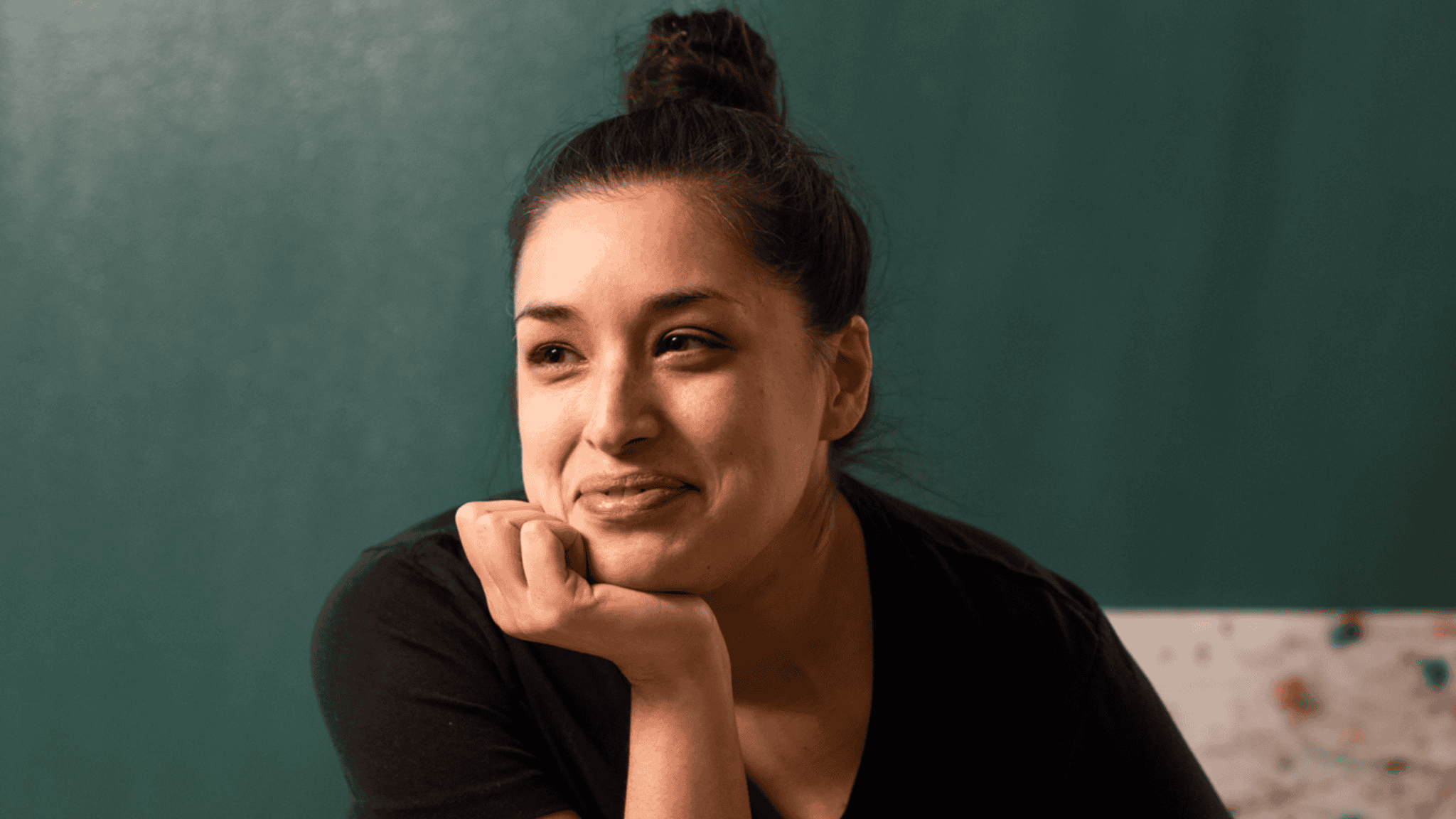
Hillel Echo-Hawk is at the forefront of Seattle’s Indigenous food movement
By Stefanie Ellis April 28, 2023
This article originally appeared in the March/April 2023 issue of Seattle magazine.
In 2022, an Indigenous-owned restaurant serving a precolonial menu — Owamni, in Minneapolis — earned a James Beard Award as the best restaurant in the country. Names like Sean Sherman and Crystal Wahpepah (respectively, a Beard award finalist for best emerging chef, and the first Native American chef to compete on the Food Network’s Chopped) are gaining recognition.
In Seattle, the conversation about Indigenous history, culture, and food sovereignty — the right to healthy and culturally appropriate food, and the right to define food and agricultural systems — is being led by Hillel Echo- Hawk, a Pawnee and Athabaskan cook, educator, and public speaker.
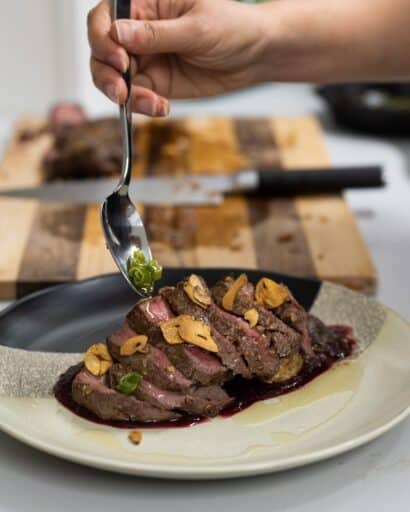
Echo-Hawk worked in several notable Seattle restaurants before quitting her job as a line cook to open catering company Birch Basket in 2018, where she uses ethically sourced, local and foraged ingredients from Indigenous purveyors. Echo-Hawk’s culinary ethos focuses on ingredients indigenous to North America before European colonization took away the rights, freedoms, and food sources of Indigenous people. She uses no dairy, chicken, wheat, beef or sugar, and focuses on wild-harvested ingredients such as salmon, berries, seeds, herbs, and wild rice.
Her approach was shaped as a child growing up in the interior of Alaska. Her influences include matriarchal chief and subsistence rights activist Katie John as well as her mother, who strove to make healthy, home-cooked meals for her and her six siblings.
Birch Basket’s catering clients have included Fred Hutch, the city of Seattle, the University of Washington, the Urban Indian Health Institute and many more. Echo-Hawk has been featured in media outlets around the world, including Bon Appetit, National Geographic, PBS, Vogue, Eater, and more.
Why are we just now talking about indigenous food when it is the root of all food?Part of what I think has brought (Indigenous people to the front of more conversations) is the farm-to-table movement, and people eating more local foods. But what is local food? Local as in grown [in a particular place] or local as in before colonization? For a really long time, there were just white farmers and white cooks talking about this. Then, I think people started to ask, “What was here before? And just how many of the foods are we actually cooking with indigenous ingredients?” I think that really took a big leap into indigenous foods and food-ways. But it has only been happening in the last 10 years.
What has contributed to the visibility of Native leaders in mainstream media?
There are amazing women (in Congress and the U.S. Department of the Interior) who walk into buildings that historically have not let Native people in, wearing traditional regalia, and bringing more awareness to Native people. How can that not be a conversation piece? Another thing that really pushed Indigenous people to the front of mainstream media was the conversation about mascots (for sports team nicknames). The name “Redskins” is a horrible, derogatory term. The background of that term is a government law saying for every savage scalped, you get five dollars. Part of having a Native mascot is like saying, “All Native people are this,” but we’re all very different, and every tribe has our own culture, government, language, and way of doing things.
What inaccuracies or omissions struck you most from history books you read growing up? There was never nice terminology connected to Indigenous people. It was “merciless savages.” Savage is a very carelessly thrown-around word in history books, and how the white man was so wonderful and kind. In reality, not so much. I have uncles and aunties who were in boarding schools where horrific things happened to them. But boarding schools, according to history books, are wonderful places. And history books don’t really say anything about commodity foods, which is a huge part of the Native diet now. And it’s causing so many health ramifications.
What gaps in our food system did you see during the pandemic?
When people were just taking stuff off the shelves in bulk (you could really see) a break in the supply chain — with trucks, suppliers, and workers — and you realized how integral food is. You can’t live without food and water, but we have become so used to all of these modern things, and don’t know how to survive. During the pandemic, people’s eyes were opened to how fragile and delicate the current system is. We can’t rely on these big supply chains. It’s not sustainable. Local farms, or even a backyard garden, are one of the keys.
What challenges did you face in launching your business? I had always either had a day job or would be adding a catering gig on the side. I had finally gotten enough jobs lined up for four to five months. So I quit and said, “Let’s do this. It’s gonna be awesome.” Then, three weeks later, the pandemic hit. Within two weeks, all of those jobs were gone. And then I started to have health issues. I’ve had epilepsy since I was 12, and started to have a lot of seizures and physically wasn’t able to cook.
What made you keep going then, and what keeps you going now? My maternal grandmother, Chaddie Kelly, was a pioneer in Alaska. She owned several businesses, and one of her crowning achievements was she was on the Businessmen’s Council in Alaska. She became the president for many years, and was the only woman. We had that spirit and that vibe around us all of the time of just like you have to keep going. You have to break these barriers because no one else is going to do it for you.
To learn more about food sovereignty and Indigenous food systems, visit the I-Collective (of which Echo-Hawk is a founding member); North American Traditional Indigenous Food Systems (an organization dedicated to reestablishing Native food-ways); or the Netflix documentary film Gather.
Follow Us

Seattle’s Pizza Just Keeps Getting Better
New openings across the city make a strong case that Seattle can finally stop apologizing for its pies.
Complaining about Seattle’s pizza scene is a well-worn civic ritual, on par with decrying the sad state of the city’s sports teams. But wake up: It’s 2026, the Seahawks are world champs, the Sonics are coming back, and Seattle is awash in great pizza. Granted, this town of transplants has no “style” to claim as…

Grounds for Success: Instant Coffee Brand Seoulli is Bringing Korean Café Culture to the Pacific Northwest
Liz Kang and her best friends aren’t strangers to the entrepreneurial journey. With roots in fashion, merchandising, tech, and business ownership, the local group of Korean American women grew up together dreaming about future success. Their newest venture is Seoulli, a Korean instant coffee brand that’s introducing the Pacific Northwest—and the world—to Korean café culture,…

Restaurant Roundup: Rooftop Bites and Pineapple Juice Coffee
Here’s what was served up recently in the Emerald City.
If you thought getting a table for before- or after-noon pancakes and mimosas was difficult before, hold on to your orange juice—the great brunch crunch is coming. We kid, but Mother’s Day is just over a week out, and sometimes to make Mom feel special, putting in the time to wait in line is the…
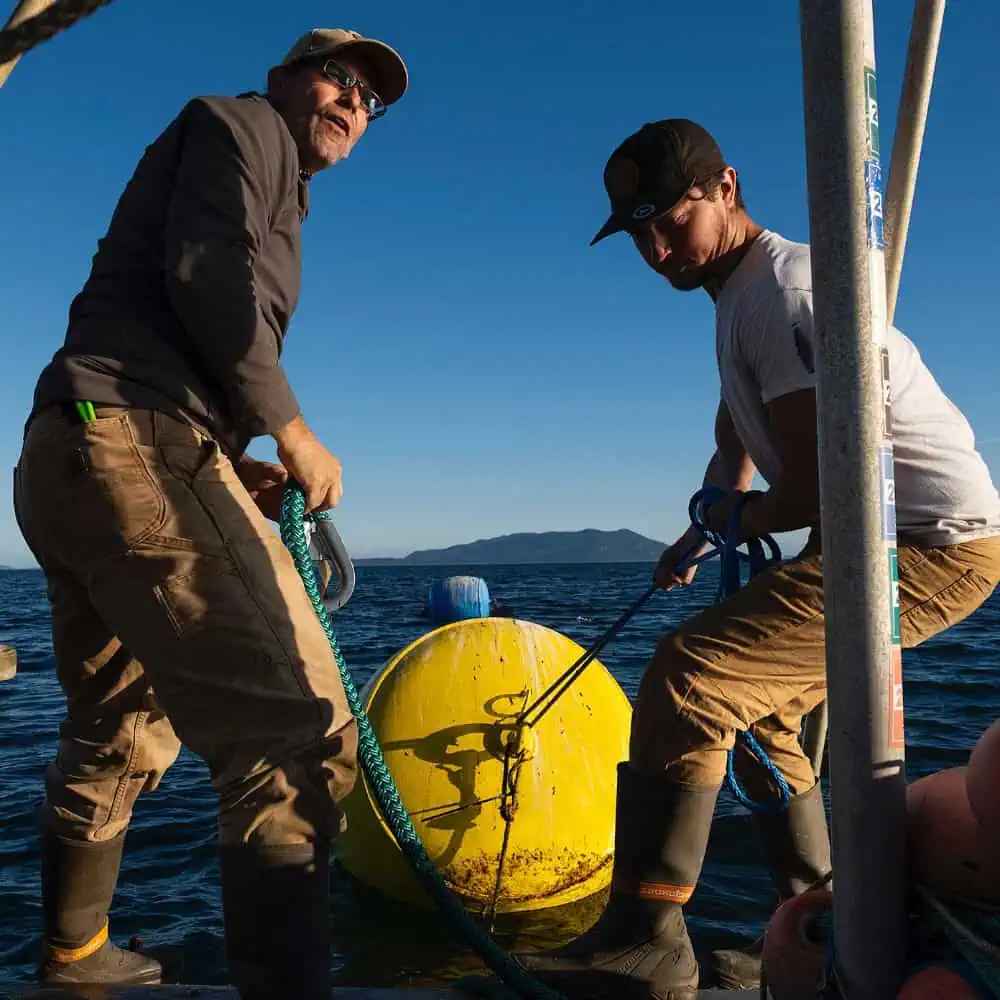
Photo Essay: The Reefnetters of Legoe Bay
A photographer’s look at the small Lummi Island fleet taking part in a long-standing fishing tradition.
While driving across the country from Detroit to San Francisco in October 2024, I stopped on Lummi Island, about 10 miles west of Bellingham, to visit my friend Peter. I had met Peter while traveling with Bread & Puppet Theater, photographing its national tour. He thought I might be interested in documenting the fishing there,…