




A Drink-Free January: Does it Really do a Body Good?
Deep breaths: I won't be in my cups until February 5
By Lauren Mang January 5, 2015
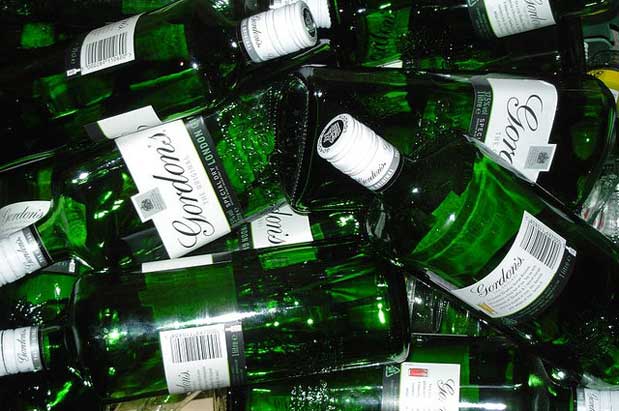
On New Year’s Eve, my husband and I each downed a dirty martini and shared two bottles of brut Champagne. Though he was kicking my tail at a rousing game of Monopoly (damn him for always snagging Marvin Gardens), our low-key bubbly- and vodka-fueled evening was a splendid way to ring in 2015.
When the final flute was cooked, we raised our empties and toasted to our next endeavor–well, mainly mine, as he likes to keep his options open: A drink-free January. Come January 1, 2015, we/I had elected to abstain from alcohol of any kind until my birthday on February 5. No mimosas on New Year’s Day. No glass or three of scotch while binge-watching episodes of Mad Men. No brewskies during the inevitable Cincinnati Bengals meltdown against the Indianapolis Colts; Sunday was a tough day.
If you’ve read anything I’ve written on this here site, you likely know that I love to drink. Exhibit A, B and C. And thanks to some clever friends, I’ve expanded my alcoholic arsenal to include brown liquors. I’m not an alcoholic, but I find extreme pleasure in drinking, whether it’s at home, at happy hour, or with a sprightly rosé at lunch (on weekends!) with friends.
But after indulging, then indulging some more during the holidays, I decided it was high time I cut back, if only for a month.
Drink-free or “dry” January is nothing new. The New York Post pooh-poohed it last year. On-air drunks Kathie Lee Gifford and Hoda Kotb of the fourth hour of NBC’s Today tried it in January 2013 and failed royally, surrendering a mere nine days later. The Daily Mail went so far as to call it “poppycock,” saying that a booze-free month is a “waste of time health-wise,” and “can actually be bad for you.”
Still, I was up for the challenge and unwilling to let any of those naysayers rain on my Prosecco-less parade. Today is day seven of my drink-free undertaking. Shockingly, I’m not hating it. And I’m not alone. Slate magazine contributor John Ore just published this piece on how 2015 is his eighth consecutive Drynuary. Seattle Times columnist Nicole Brodeur also took to the web to proclaim her love for the tradition.
I did, however, want to do some of my own research on the subject. Are there pitfalls to this quest? Would not being in my cups for 36 days have any positive effects on my health? The Tylenol bottle has definitely experienced a little R&R these past few days.
To answer these burning questions, I turned to a few health and nutrition experts who gave me their take on the popular post-holiday drink fast.
“It’s a terrific idea,” says Seattle-based certified nutritionist and wellness coach Deborah Enos. “Over the holidays we consume way too much alcohol and we eat 30 percent more calories when we’re drinking. Alcohol lowers our defenses and when we’re drinking every day of the week, we have a tendency to just gulp it down and not take the time to enjoy it.”
Enos, whose resume includes a healthy 26 years of experience as a nutritionist, plus stints as an on-air wellness consultant for the likes of King 5 and Kiro Radio, credits this week as her busiest of the year: Everyone wants to lose 10 pounds.
Not suprisingly, a booze break could help to do just that. “Alcohol calories fairly easily convert to fat and when my clients are drinking, they have the tendency to lodge fat around the waistline,” she says. “Cutting alcohol can jumpstart weight loss.”
So far so good. But what about once I start imbibing again. Will I be more likely to binge after depriving myself, inhaling fistfuls of peanuts in between swigs from my flower vase full of wine? (Yes, peanuts and wine.) “Unless you have a drinking problem and can’t control yourself,” Enos says. “I see no negatives to cutting back.” It’s even possible that I’ll learn to savor every sip of a glass of wine and see drinking as a treat.
Carolyn Dean, MD, ND and medical advisory board member for the Nutritional Magnesium Association, is also on board with Drynuary. “I tell people to ‘experiment’ [going] off alcohol for 3-4 weeks and then when they drink again, see how it makes them feel,” Dr. Dean says. “Many people have intestinal yeast overgrowth and they are feeding their yeast with alcohol, which gives them a host of unhealthy symptoms. Regular alcohol drinking can also be creating a fatty liver that will not be diagnosed until obvious symptoms develop. Until they quit alcohol entirely they don’t know how their body feels without it. Also, if they can’t stop it for a month, that’s a sign of addiction.”
And if you’re addicted, Dr. Dean notes you’ll experience some withdrawal symptoms six to 12 hours after you’ve quit, including shaky hands, headaches, nausea and insomnia.
During a fast and after a fast has ended, Dr. Dean recommends supplementing vitamins, amino acids, fatty acids, enzymes, proteins and minerals as alcohol depletes these in the body. “ A drink of alcohol in hand has replaced the cigarette in hand and is such a “normal” thing to do that people don’t realize that more than one drink a day can have very negative effects.”
Christen Cooper, a registered dietitian and doctoral candidate in nutrition at Columbia University, agrees. “Drinking in excess of these modest amounts raises the risks of many problems, such as some types of cancer,” she says. “To undo any weight gained during the holidays, to give the body a rest from potentially harmful effects of excessive alcohol intake, and even to save some money, a drink-free January is a good way to kick off the new year.”
So far, I’m happy with my choice and I’m feeling great, though I’m attending opening night of the opera this Saturday where bubbly flows like a sweet, sweet aria. But I am looking forward to Febuary 5–what a way to make a 33rd birthday something to anticipate!–when I’m once again reunited with my beloved adult beverages. Now, where’s my wine glass full of sparkling water?
To answer these burning questions, I turned to a few health and nutrition experts who gave me their take on the popular post-holiday drink fast.
“It’s a terrific idea,” says Seattle-based certified nutritionist and wellness coach Deborah Enos. “Over the holidays we consume way too much alcohol and we eat 30 percent more calories when we’re drinking. Alcohol lowers our defenses and when we’re drinking every day of the week, we have a tendency to just gulp it down and not take the time to enjoy it.”
Enos, whose resume includes a healthy 26 years of experience as a nutritionist, plus stints as an on-air wellness consultant for the likes of King 5 and Kiro Radio, credits this week as her busiest of the year: Everyone wants to lose 10 pounds.
Not suprisingly, a booze break could help to do just that. “Alcohol calories fairly easily convert to fat and when my clients are drinking, they have the tendency to lodge fat around the waistline,” she says. “Cutting alcohol can jumpstart weight loss.”
So far so good. But what about once I start imbibing again. Will I be more likely to binge after depriving myself, inhaling fistfuls of peanuts in between swigs from my flower vase full of wine? (Yes, peanuts and wine.) “Unless you have a drinking problem and can’t control yourself,” Enos says. “I see no negatives to cutting back.” It’s even possible that I’ll learn to savor every sip of a glass of wine and see drinking as a treat.
Carolyn Dean, MD, ND and medical advisory board member for the Nutritional Magnesium Association, is also on board with Drynuary. “I tell people to ‘experiment’ [going] off alcohol for 3-4 weeks and then when they drink again, see how it makes them feel,” Dr. Dean says. “Many people have intestinal yeast overgrowth and they are feeding their yeast with alcohol, which gives them a host of unhealthy symptoms. Regular alcohol drinking can also be creating a fatty liver that will not be diagnosed until obvious symptoms develop. Until they quit alcohol entirely they don’t know how their body feels without it. Also, if they can’t stop it for a month, that’s a sign of addiction.”
And if you’re addicted, Dr. Dean notes you’ll experience some withdrawal symptoms six to 12 hours after you’ve quit, including shaky hands, headaches, nausea and insomnia.
During a fast and after a fast has ended, Dr. Dean recommends supplementing vitamins, amino acids, fatty acids, enzymes, proteins and minerals as alcohol depletes these in the body. “ A drink of alcohol in hand has replaced the cigarette in hand and is such a “normal” thing to do that people don’t realize that more than one drink a day can have very negative effects.”
Christen Cooper, a registered dietitian and doctoral candidate in nutrition at Columbia University, agrees. “Drinking in excess of these modest amounts raises the risks of many problems, such as some types of cancer,” she says. “To undo any weight gained during the holidays, to give the body a rest from potentially harmful effects of excessive alcohol intake, and even to save some money, a drink-free January is a good way to kick off the new year.”
So far, I’m happy with my choice and I’m feeling great, though I’m attending opening night of the opera this Saturday where bubbly flows like a sweet, sweet aria. But I am looking forward to Febuary 5–what a way to make a 33rd birthday something to anticipate!–when I’m once again reunited with my beloved adult beverages. Now, where’s my wine glass full of sparkling water?
Follow Us

Dog of the Month: Josie
Adopt this wiggly two-year-old who loves hiking and bedtime snuggles.
Josie comes with big claims. She says she is the owner of a 1966 Ford Galaxie 500 that needs a little bit of work but should be “totally sweet” once she “hits the junkyard for a couple of parts.” When asked for further details on Josie’s ownership of the car, a baffled Washington Department of…

Mother’s Day Gift Guide
Shop local and give her something she’ll love.
Mother’s Day is coming up on Sunday, May 10, and the right gift really depends on the mom. Maybe she wants flowers. Maybe she wants lunch by the water. Maybe she wants something useful, pretty, or delicious. Whatever the day looks like, a little thought goes a long way. It can also be a complicated…

Here’s Your Earth Month To-Do List
Local cleanups, trail work, and ways to get outside this April.
In the Pacific Northwest, a region deeply connected to water, forests, and ecosystems, the climate conversation has never been theoretical. It shows up as shrinking snowpack, severe flooding, and warming streams. If the planet’s future—and that of our own backyard—can feel overwhelming, this year’s Earth Day theme, “Our Power, Our Planet,” puts the action back…

A Clear Vision for Growth
Local optometry clinic Eye Eye celebrates a decade in business and prepares to debut its first line of frames.
In Leschi Park, overlooking Lake Washington, towers one of Seattle’s many historic trees, a giant sequoia planted sometime in the early 20th century. Just down the street on Lakeside Avenue is the second location of eye clinic and shop Eye Eye, where Dr. Will Pentecost seems to be borrowing some of the leafy specimen’s energy….