




Food for Thought: Chef Renee Erickson on Sustainable Seafood in Seattle
We asked one of the city's most renowned chefs how we can feel good about eating seafood right now
By Chelsea Lin February 18, 2020
This article originally appeared in the February 2020 issue of Seattle magazine.
This article appears in print in the February 2020 issue, as part of the 100 Best Things To Eat Seafood Edition. Click here to subscribe.
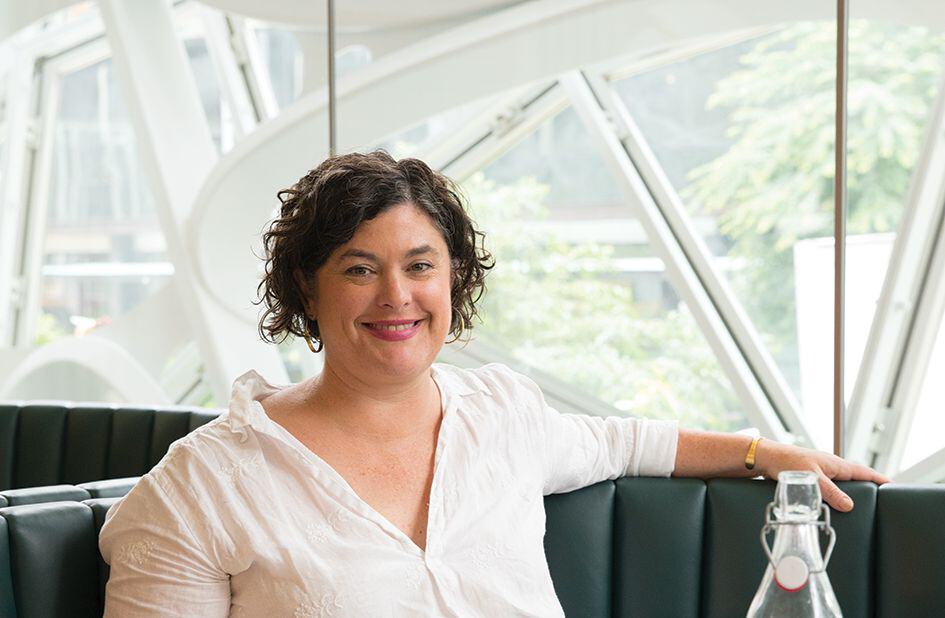
Chef and restaurateur Renee Erickson needs no introduction here. Her restaurants—the most renowned being The Walrus and the Carpenter, The Whale Wins and Willmott’s Ghost—are beloved most for their preparations of seafood. But not just any seafood. Erickson runs a tight ship when it comes to sustainability, and in 2018, she made headlines for pulling chinook salmon (few in number and integral to the diet of our resident orcas) off all her menus. We sat down with the seafood advocate and asked one question: “As environmentally conscious Seattleites, how can we feel good about eating seafood right now?”
As told to Chelsea Lin
It’s a huge can of worms. Reading up on Monterey Bay Aquarium’s Seafood Watch and using that as a guide is a really good place to start. The thing no one wants to hear is that it’s our responsibility to do the work. No one’s going to do it for us. If we want to pretend like we give a s— we have to read, and not while we’re at the dinner table, but before we go out in the world.
Where is the line drawn? For me, I’m on the more extreme end of things. But I also drive a car. So, we all just have to make the best decisions we can. And if you screw up, that’s fine, just keep trying to get better.
I would say eating shellfish [rather than finfish] is a good way to feel good about what you’re doing. It’s a lot easier to grow oysters than a salmon. Also, looking at the species more than at the place; thinking, “OK, I’m at a sushi restaurant and they’re serving me farmed Atlantic salmon. They’re maybe not making as good of a choice as I’d hope they would.”
People haven’t really gotten to a place where they’re willing to give up something they love. We can’t pretend we get to have whatever we want anymore. And that sucks—nobody wants to hear that. Are we willing to mindlessly eat whatever we want knowing it will be gone one day? Or try to stop it? There’s [still] no guarantee that it will work. But I’ll feel better knowing that I didn’t keep eating bluefin tuna until they were gone.
We’ve been luxuriating in a world where we assumed the best and were fed the worst. Now, I think we’re seeing the fallout of that, where food has degraded, the quality is super poor. Farmed Atlantic salmon is not salmon in my mind. It’s this big fish that doesn’t have to do any of the things salmon have to do to survive; therefore, it’s not salmon. It’s frustrating. I go in waves where I’m just like, “Am I a lunatic?” I get angry, super angry about it. I don’t even know if people are thinking about it. They’re just like, “It’s salmon, I’m gonna eat it.”
The only people who were really angry [when I pulled chinook off the menu] were chinook fishermen—and not the ones we buy from even. This isn’t because I don’t want fishermen to be successful. I do. I just want fish to be here 10 or 15 or 100 years from now. I didn’t feel like I could keep serving something that I knew was threatening the survival of orca whales as well as the survival of the salmon.
You have to just try to make the best decisions and not beat yourself up if you don’t. Live and learn. Whale Wins served trout when we opened, and I love trout. But after a year of us serving trout, I got to a place where I was like, “Huh, I wonder what they’re feeding the trout?” I hadn’t even thought about it. And, of course, they were feeding them GMO corn and s—. So, we stopped serving trout. People were furious about that—far more furious than they were about chinook salmon, which I find hilarious. I would forever take chinook salmon over farmed trout.
Now, there are times when I call Corey [Peet, the technical adviser for the James Beard Foundation’s Smart Catch seafood sustainability program] and ask, “What should I be buying? Is anything OK?” I remember asking him once, “Should I be serving any salmon at all?” And he said, “Honestly, probably not. Especially not chinook.” We have a sustainable guide for our chefs that goes from where we want [them] to buy olive oil to farmers [to source produce from] and that kind of thing. If you want to buy fish, do the investigation, look it up, ask me. We’ll figure out if it’s safe or not. There isn’t a lot that we can buy.
[I’m just asking people to] pick a side. Give a f— or don’t. But if you don’t, you have to say it out loud.
This interview was edited for clarity and length.
Follow Us

Seattle’s Pizza Just Keeps Getting Better
New openings across the city make a strong case that Seattle can finally stop apologizing for its pies.
Complaining about Seattle’s pizza scene is a well-worn civic ritual, on par with decrying the sad state of the city’s sports teams. But wake up: It’s 2026, the Seahawks are world champs, the Sonics are coming back, and Seattle is awash in great pizza. Granted, this town of transplants has no “style” to claim as…
Grounds for Success: Instant Coffee Brand Seoulli is Bringing Korean Café Culture to the Pacific Northwest
Liz Kang and her best friends aren’t strangers to the entrepreneurial journey. With roots in fashion, merchandising, tech, and business ownership, the local group of Korean American women grew up together dreaming about future success. Their newest venture is Seoulli, a Korean instant coffee brand that’s introducing the Pacific Northwest—and the world—to Korean café culture,…

Restaurant Roundup: Rooftop Bites and Pineapple Juice Coffee
Here’s what was served up recently in the Emerald City.
If you thought getting a table for before- or after-noon pancakes and mimosas was difficult before, hold on to your orange juice—the great brunch crunch is coming. We kid, but Mother’s Day is just over a week out, and sometimes to make Mom feel special, putting in the time to wait in line is the…
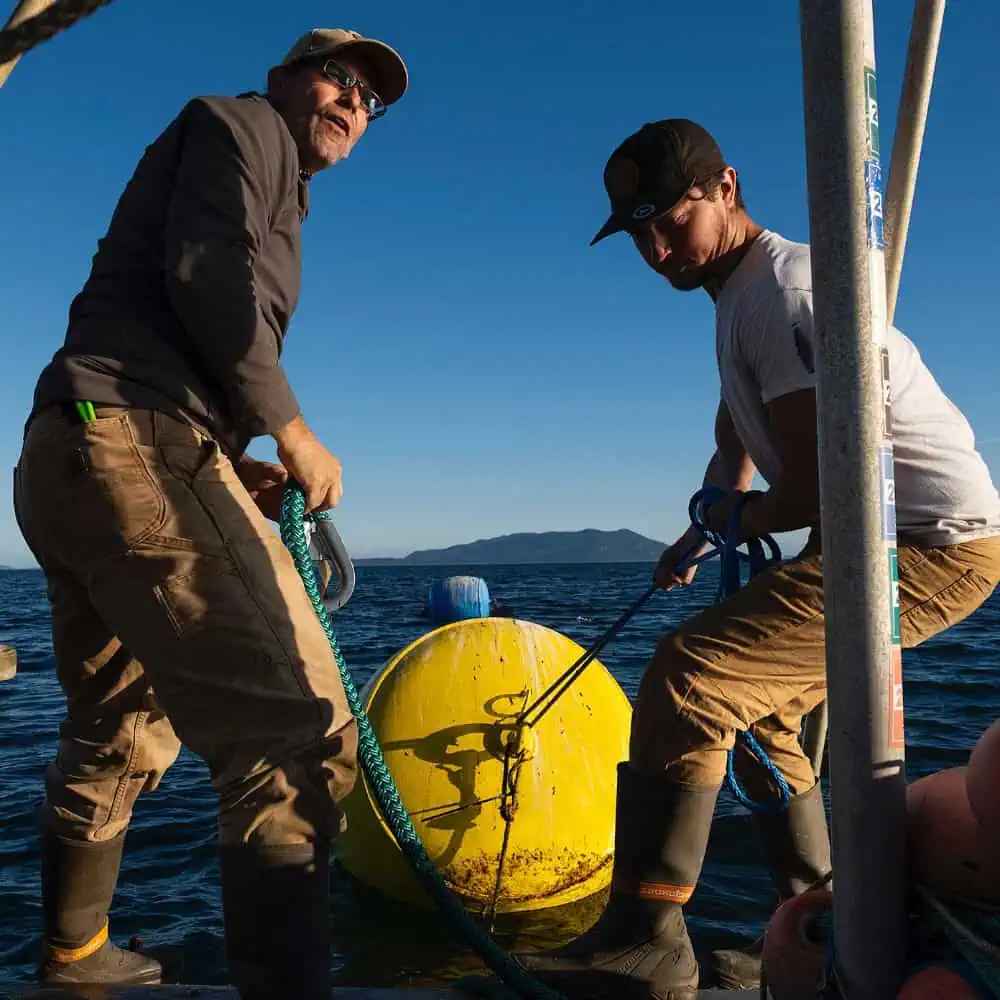
Photo Essay: The Reefnetters of Legoe Bay
A photographer’s look at the small Lummi Island fleet taking part in a long-standing fishing tradition.
While driving across the country from Detroit to San Francisco in October 2024, I stopped on Lummi Island, about 10 miles west of Bellingham, to visit my friend Peter. I had met Peter while traveling with Bread & Puppet Theater, photographing its national tour. He thought I might be interested in documenting the fishing there,…