




How to Go Foraging for Thimbleberries
Plus: a recipe for a delicious homespun thimbleberry jam
By Langdon Cook June 25, 2018
This article originally appeared in the July 2018 issue of Seattle magazine.
This article appears in print in the July 2018 issue. Click here to subscribe.
One of my favorite summer sweets is a berry that can’t be bought. You won’t find it for sale in a green carton at the farmers market, and it won’t grace the menu of your most earnest locavore restaurant. It’s wild—and it has a shelf life of maybe a nanosecond, usually falling apart in my hand as soon as I pick it. To enjoy this fleeting fruit of the season, I strap on my hiking boots and head for the hills.
Thimbleberries are members of the Rubus genus, which includes some of our most recognizable berries, from blackberries to raspberries to salmonberries. Technically, the fruits of these shrubby plants are not really berries—they’re an aggregate of what botanists call “drupelets,” with each drupelet containing a seed. But for our purposes, we’ll call them berries.
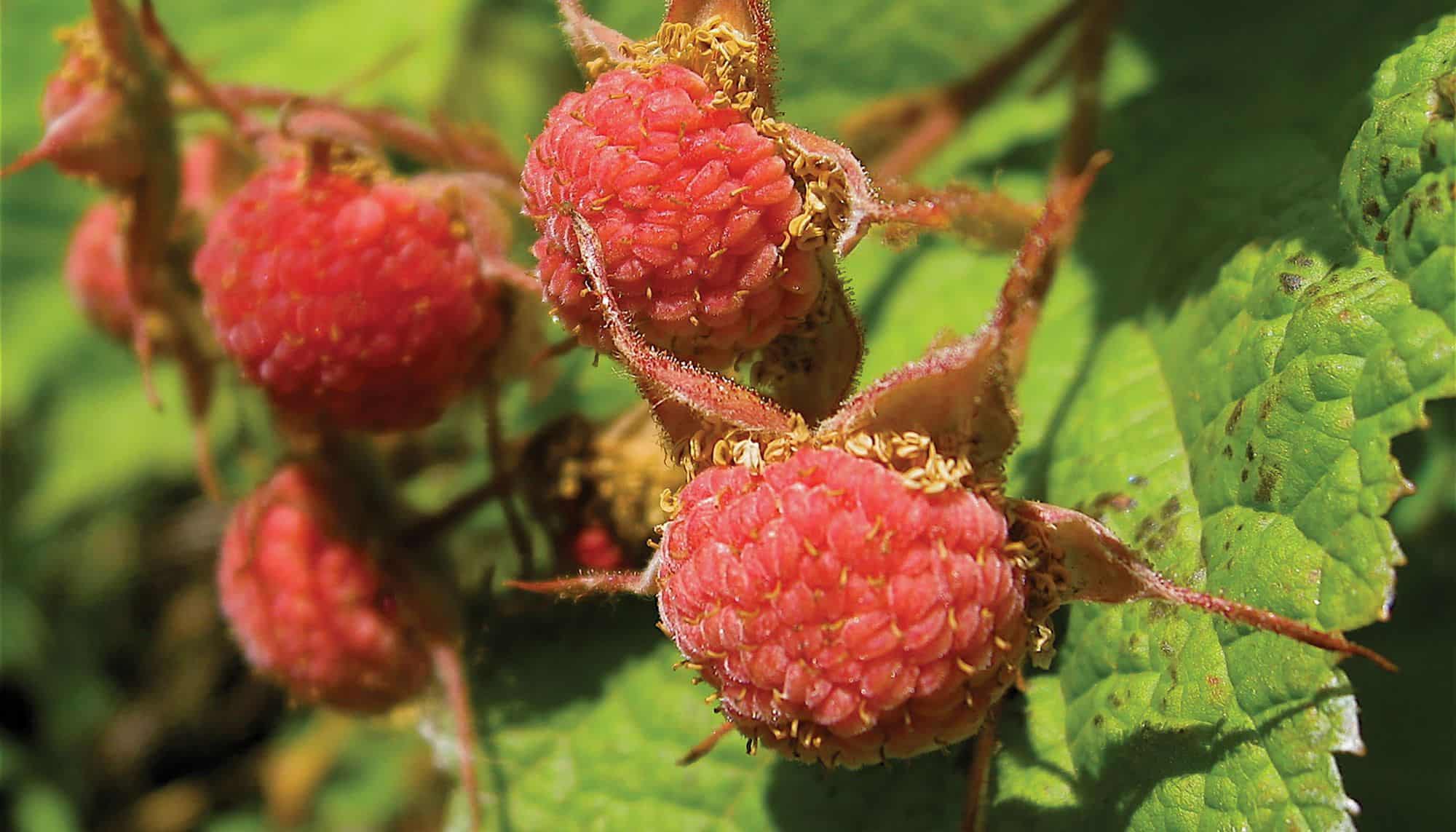
Though the thimbleberry is fragile and anti-commercial in nearly every way, its flavor punches way above its weight. It looks and tastes a little bit like a red raspberry, with a strong, untamed edge and a slightly drier texture.
All the Rubus species thrive in areas of disturbance, which is why we often see them along roads and trails, in old burns or clear-cuts, and taking over abandoned lots. The thimbleberry, however, is notable for being our only local Rubus lacking thorns. This means you can wade into a thimbleberry patch without fear of being torn to shreds.
That said, finding a thicket of thimbleberries large enough to “wade into” is not so easy; most are relatively small. If you do find a big one, remember where it is. I’ve got my own go-to spot up in the North Cascades, a little east of the crest, and it requires a 5-mile round-trip hike—a small price to pay for a patch as large as a few football fields. I call it my “old-growth thimbleberry patch,” and I suspect it’s been there for a long time, because when I pick it, I’m often off the ground, meandering along on a dense latticework of canes. I try to visit it every August; the month of July, however, is best for thimbleberries at lower elevations.
To harvest efficiently, I use a bucket hanging around my neck from a lanyard (picking with both hands is faster than one), and by the time I’ve picked my fair share, the bucket looks like it’s filled with red paint. That’s OK, because I’m not hoping to put a pretty bowl of berries on the table. My plan is to make thimbleberry jam.
There’s one more thing to know about the usefulness of thimbleberries: They have large, soft, fuzzy leaves—nature’s toilet paper when you’re in the backcountry.
 Photograph by Langdon Cook
Thimbleberry Jam
Thimbleberries are naturally high in pectin, so all you need is a 1:1 ratio of sugar to berries and a tablespoon or two of lemon juice, depending on the size of your batch.
In a pot over medium heat, simmer berries to desired viscosity.
Raise heat, add sugar and lemon, and bring to a boil for 1 minute. Skim foam from top.
Ladle jam into sterilized jars for canning. Secure the lids and give the jars a 10-minute bath in boiling water.
Follow Us

Seattle’s Pizza Just Keeps Getting Better
New openings across the city make a strong case that Seattle can finally stop apologizing for its pies.
Complaining about Seattle’s pizza scene is a well-worn civic ritual, on par with decrying the sad state of the city’s sports teams. But wake up: It’s 2026, the Seahawks are world champs, the Sonics are coming back, and Seattle is awash in great pizza. Granted, this town of transplants has no “style” to claim as…

Grounds for Success: Instant Coffee Brand Seoulli is Bringing Korean Café Culture to the Pacific Northwest
Liz Kang and her best friends aren’t strangers to the entrepreneurial journey. With roots in fashion, merchandising, tech, and business ownership, the local group of Korean American women grew up together dreaming about future success. Their newest venture is Seoulli, a Korean instant coffee brand that’s introducing the Pacific Northwest—and the world—to Korean café culture,…

Restaurant Roundup: Rooftop Bites and Pineapple Juice Coffee
Here’s what was served up recently in the Emerald City.
If you thought getting a table for before- or after-noon pancakes and mimosas was difficult before, hold on to your orange juice—the great brunch crunch is coming. We kid, but Mother’s Day is just over a week out, and sometimes to make Mom feel special, putting in the time to wait in line is the…

Photo Essay: The Reefnetters of Legoe Bay
A photographer’s look at the small Lummi Island fleet taking part in a long-standing fishing tradition.
While driving across the country from Detroit to San Francisco in October 2024, I stopped on Lummi Island, about 10 miles west of Bellingham, to visit my friend Peter. I had met Peter while traveling with Bread & Puppet Theater, photographing its national tour. He thought I might be interested in documenting the fishing there,…