




More Than a Watch Party
At the Museum of Flight, Seattle celebrated Artemis II with real ties to the mission.
 By Sarah Stackhouse April 2, 2026

A moon mission lifted off in Florida on Wednesday, but one of the most interesting places to see it was Seattle.
On April 1, the Museum of Flight hosted a free public watch party for Artemis II, NASA’s first crewed mission around the moon in more than 50 years. The event included a live broadcast, remarks from people in the local space community, and experts on hand to answer questions. When the countdown hit zero, people packed into the museum’s viewing rooms and broke into cheers as the rocket lifted off.
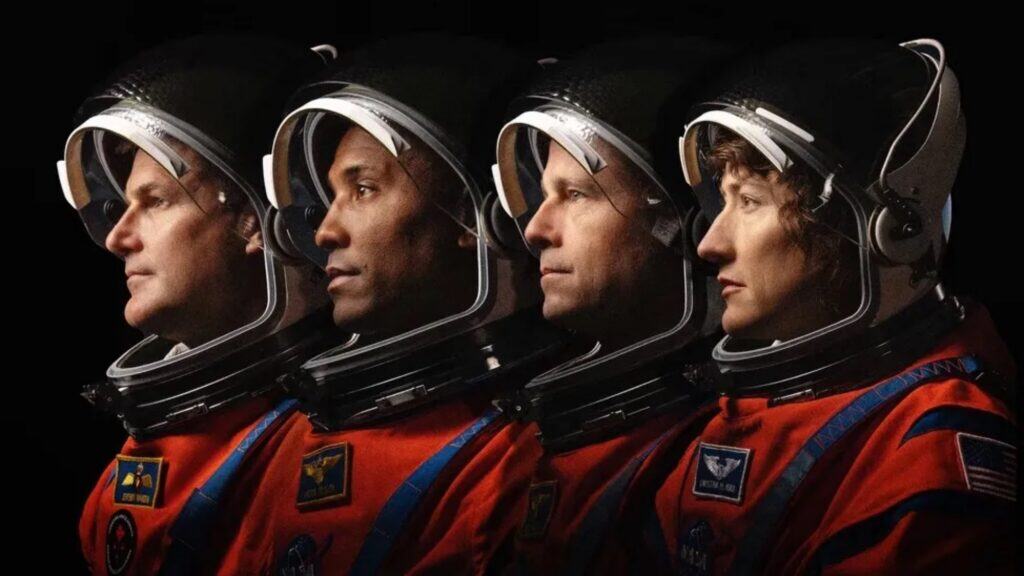
The mission launched from NASA’s Kennedy Space Center with four astronauts aboard—Reid Wiseman, Victor Glover, Christina Koch, and Canadian astronaut Jeremy Hansen. The crew is expected to spend about 10 days in space and travel about 685,000 miles as they loop around the moon before returning for a splashdown in the Pacific Ocean. Among them are the first woman and the first Black astronaut to fly on a lunar mission: Koch and Glover. NASA says Artemis II will test the Orion spacecraft and other deep-space systems before future missions.
Seattle has a stake in this story, too. The Space Launch System core stage that powered Artemis II was Boeing-built. “Today we witnessed our friends embark on a historic mission aboard our rocket,” says John Shannon, vice president of Boeing’s Exploration Systems business. “Our focus has been on prioritizing the quality of the vehicle and the safety of the crew as they begin their journey. This rocket is designed to withstand incredible forces while speeding through the atmosphere, and it performed exactly as intended.” The core stage stands 212 feet tall and carries 196,000 gallons of liquid oxygen and 537,000 gallons of liquid hydrogen. Boeing says the next core stages, for Artemis III through V, are already in production.
Forty-one Washington companies also supplied key components for the mission. Karman Space & Defense’s Mukilteo campus produced Orion hatch release mechanisms and forward bay cover thrusters, and L3Harris in Redmond manufactured thrusters used to help return the crew safely to Earth. “We’re really proud that the state is playing such a big role in solving these space problems,” Sen. Maria Cantwell says. “Ultimately, Artemis is about returning to the moon and building a permanent moon base that can then be used for accelerating our travel to Mars. So this is a really, really big moment for the Pacific Northwest.”
NASA’s live broadcast kept cutting back to the Museum of Flight (one of the best attractions in the city!), along with other watch parties around the world. That alone was pretty great. Seeing humans head back toward the moon is something all of us connect to, no matter where we live. In Seattle, though, with our deep ties to aerospace—and to this mission—it was especially thrilling.
Follow Us
A New Climate Fund Starts With Indigenous Leadership
The $5.5 million investment will support seven Tribal governments and Indigenous-led organizations working on climate projects across Greater Seattle and Puget Sound.
As we head into another summer of hotter days, drought, stress on waterways and habitat, and the now-familiar arrival of wildfire smoke, the First Peoples Climate Fund puts city and philanthropic money behind Native communities already doing the work of responding to these pressures, many of them closest to the impacts and with long-held knowledge…

Washington’s Gender Wage Gap is Widening, Study Finds
Women earned $18,545 less than men in 2024, one of the widest disparities in the country.
The wage gap between men and women in Washington is the second widest in the country. An analysis released in March from the National Partnership for Women and Families found that women in Washington earned a median income $18,545 less than their male counterparts, the largest gap in the country second only to Utah. For…
A Letter to the Community
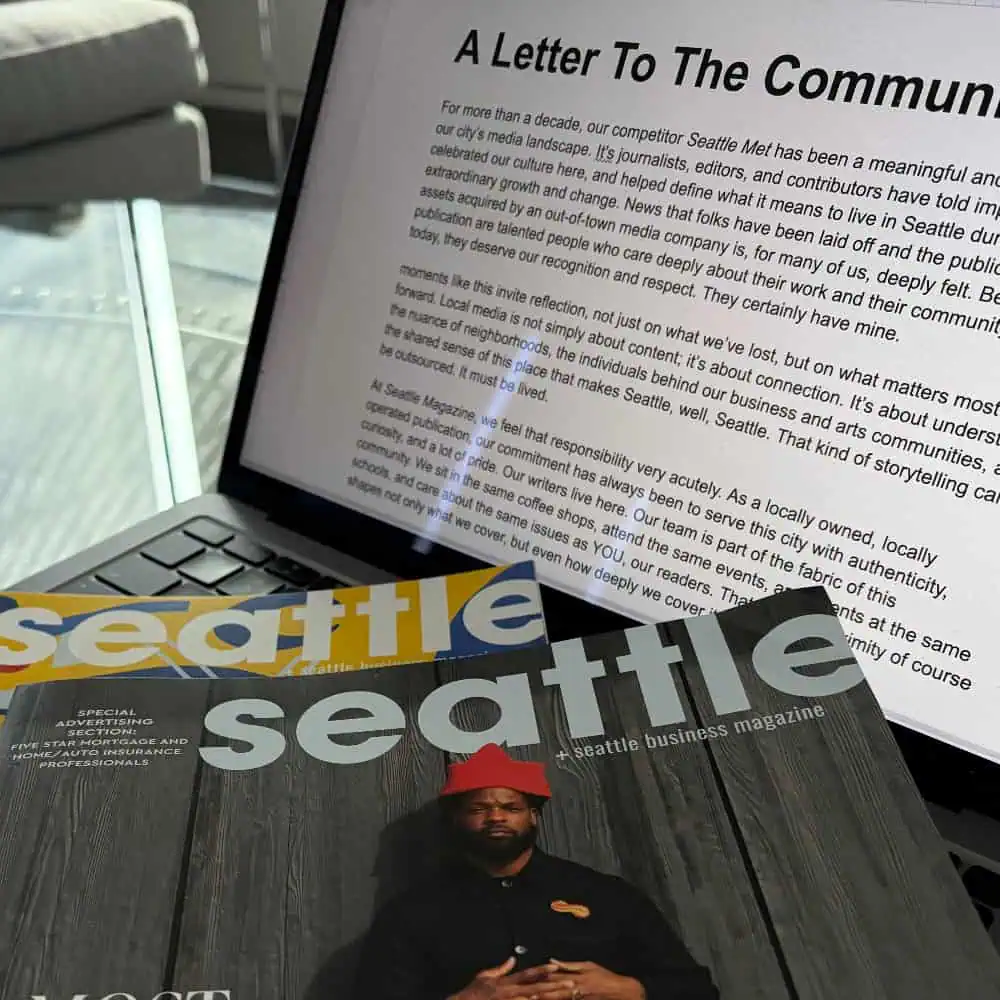
For more than a decade, our competitor Seattle Met has been a meaningful and vibrant voice in our city’s media landscape. Its journalists, editors, and contributors have told important stories, celebrated our culture here, and helped define what it means to live in Seattle during a period of extraordinary growth and change. News that folks…

Rearview Mirror: Cherries, Darts, and What’s Next at Seattle Rep
Things I did, saw, ate, learned, or read in the past week (or so).
The Cherry Story This week, I talked with author Livia Blackburne and Seattle-based illustrator Julia Kuo about their beautiful new picture book, Bing’s Cherries. The story traces the origins of the Bing cherry through a young girl imagining the life of Ah Bing, the Chinese immigrant who cultivated the fruit. It moves between fact and…