




Go See Diné Artist Eric-Paul Riege’s Largest Show to Date at the Henry Art Gallery
With a mix of mediums, ojo|-|ólǫ́ examines questions surrounding the authenticity and ownership of Indigenous work.
 By Rachel Gallaher April 20, 2026
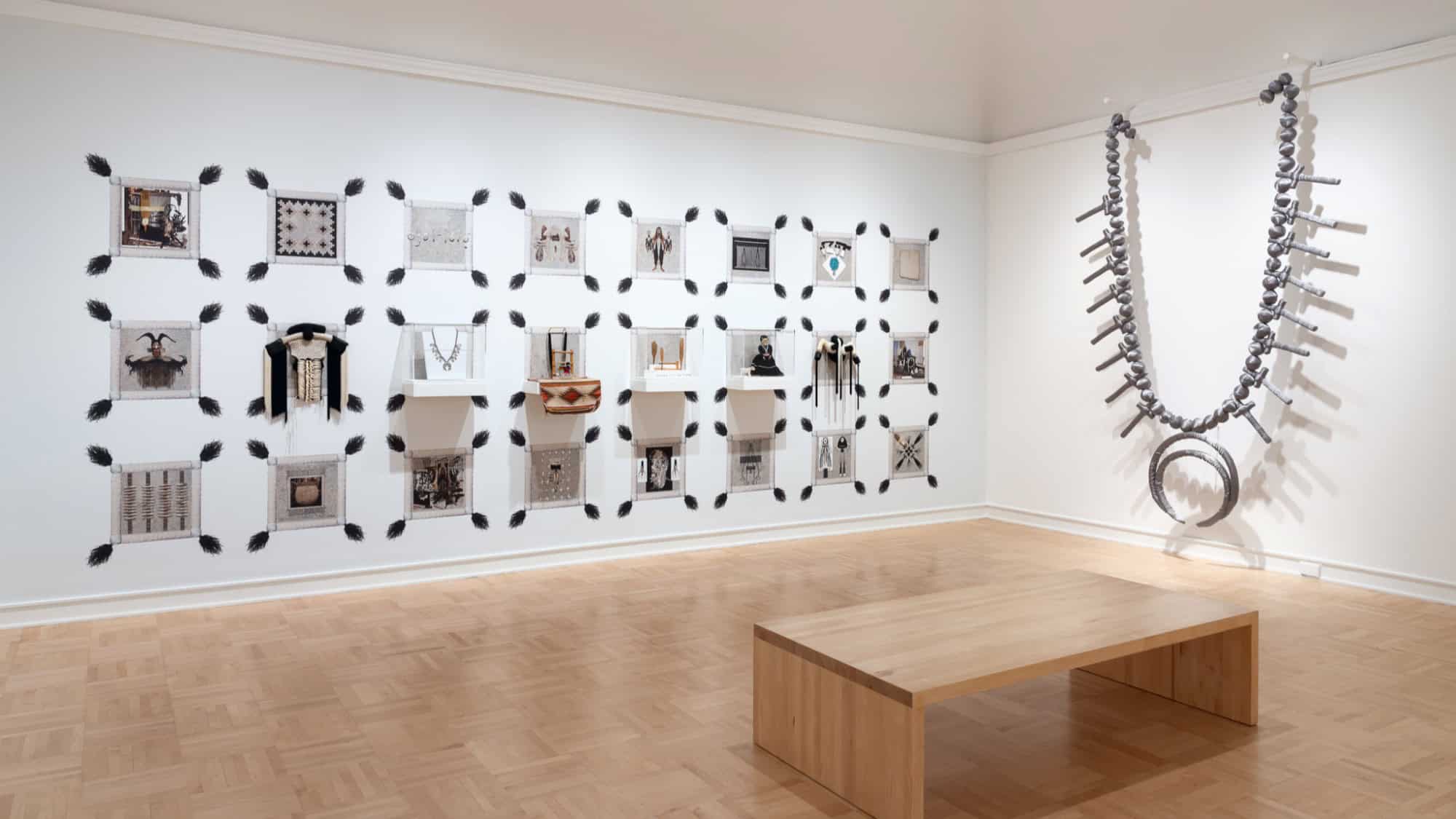
It’s a phrase that’s been drilled into most of us since we were young children: When you’re visiting a gallery, please, do not touch the art. In many cases, it’s with good reason: the pieces on display are fragile, one-of-a-kind, or historic works that cannot be reproduced. It’s such an ingrained approach to the museum-going experience, that on a recent visit to the Henry Art Gallery—a press preview for the opening of Diné artist Eric-Paul Riege’s exhibition, ojo|-|ólǫ́ (pronounced oh-ho hol-ohn)—when our group was told that we, in fact, could touch the art, everyone looked around in a moment of confusion.
“We are really inviting people to touch the work!” said Nina Bozicnik, senior curator at Henry Art Gallery. We were standing in the gallery’s largest room surrounded by hanging looms and layered, black-and-white textile sculptures. “As Eric-Paul was saying, these sculptures can carry the mark of all the people who interact with them. Here, we become part of the story, the material history that’s embedded in the objects.”
This idea of mutual exchange through physical interaction—the notion that when you touch something you change it, and it changes you—runs through much of Riege’s work. He thinks at both ends of a piece, from those who are behind the production of a material (the people who washed the sheep, carded the wool, and delivered it to the craft store, etc.) to the viewers who come see the piece once it’s installed. “All of these fingers are embedded within my material,” he says. “So, I consider them inherent collaborators.”
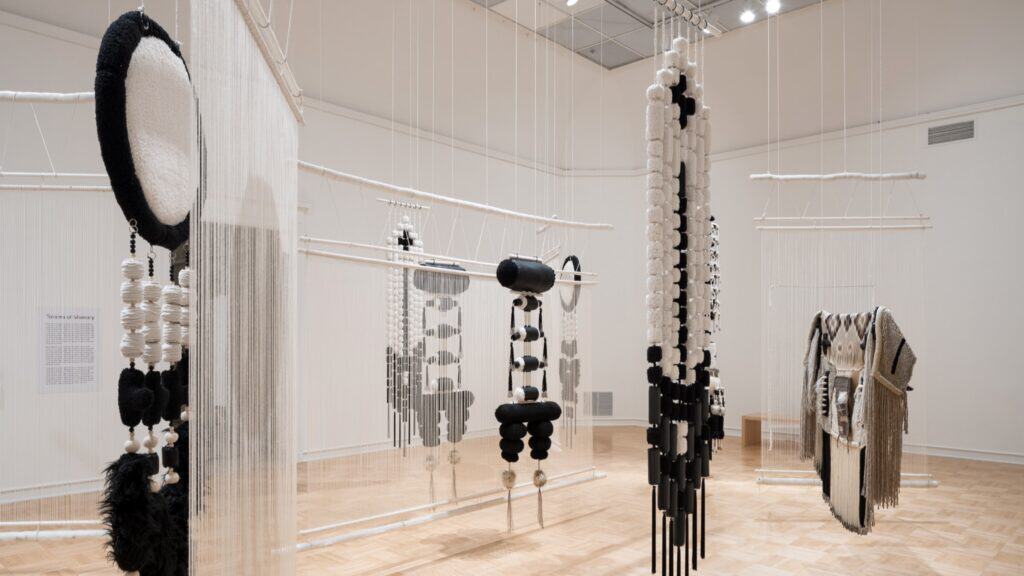
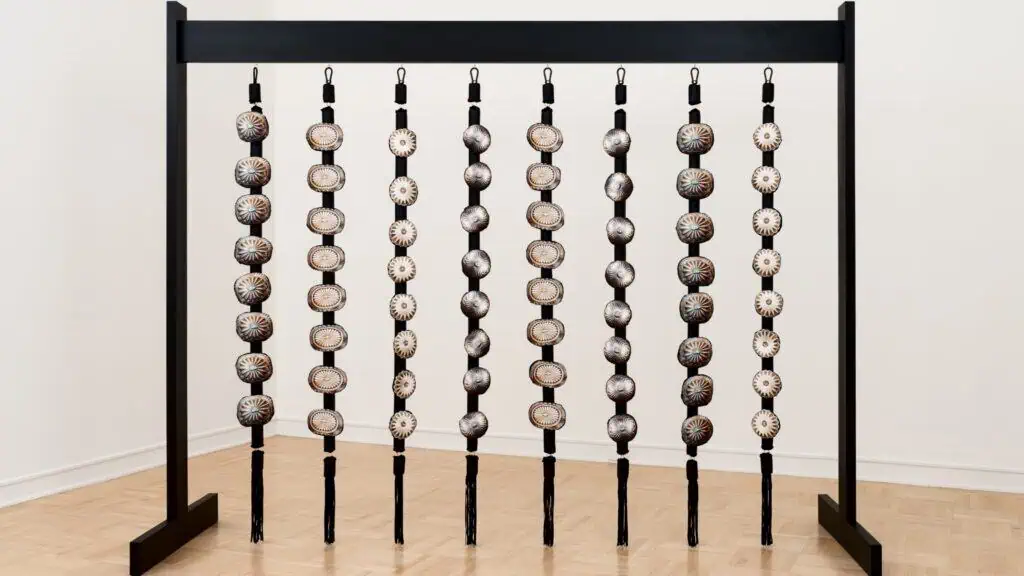
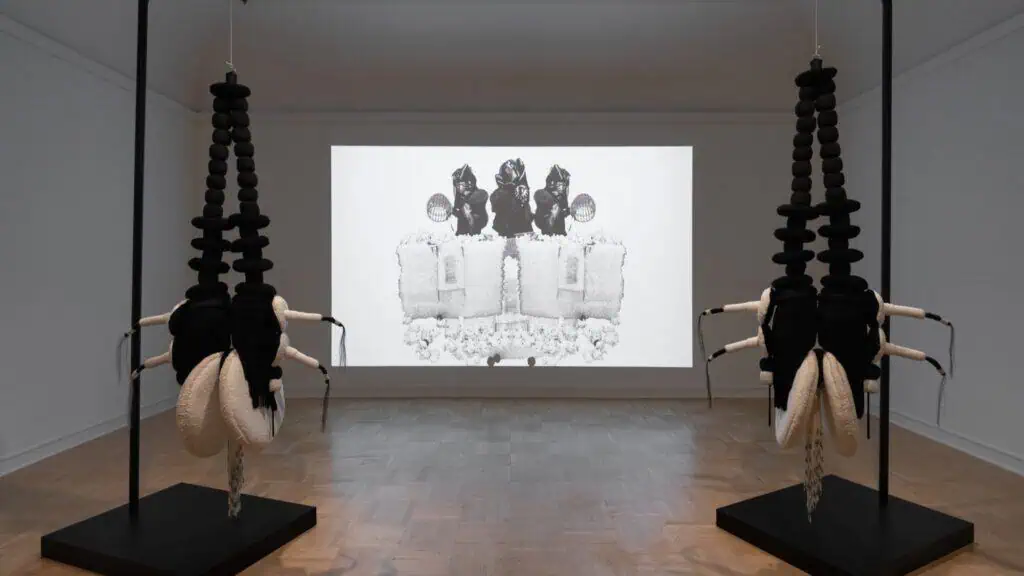
“My work is really modular,” he says. “A lot of parts are new, but then other parts [were] made 10 years ago and they are sewn directly on to each other. “Things get changed and moved all the time in my work … That’s something that I want to celebrate with objects that I consider living, is to have that accumulation of marks and tattoos and stitches and mending, because it has a lived history, both with me and separate from me and with [the viewer].”
Throughout the gallery, Riege plays with our expectations, often using materials such as plastic shower curtains or hair clips from Claire’s, that would traditionally be considered “lowbrow.” The fact that we can’t tell brings into question how we, and more importantly, who should, determine things like authenticity or value. Riege recalls a time when he was a student at the University of New Mexico in Albuquerque (he is currently based in Gallup, New Mexico), where he saw a news piece talking about how to spot fake Native art. “I watched this news article, and a lot of it was about material choice,” Riege recalls, “like inauthentic turquoise or tin versus sterling silver versus silver.”
In that moment, he started thinking about questions surrounding the concept of authenticity: What if a Native artist who comes from a family of makers can’t afford certain materials? What makes something fake or less authentic than the work of Native artists who can? “At the time, I was someone who also couldn’t afford to buy turquoise and silver, and I worked with fabric,” Riege says. “So, I started making beads and stones out of cheap fabric from the thrift store or Walmart or Joann Fabrics. I like taking something that was deemed natural stone or real silver, then making a fake version of it … I want to leave it up to the viewer to decide what they deem as real.”
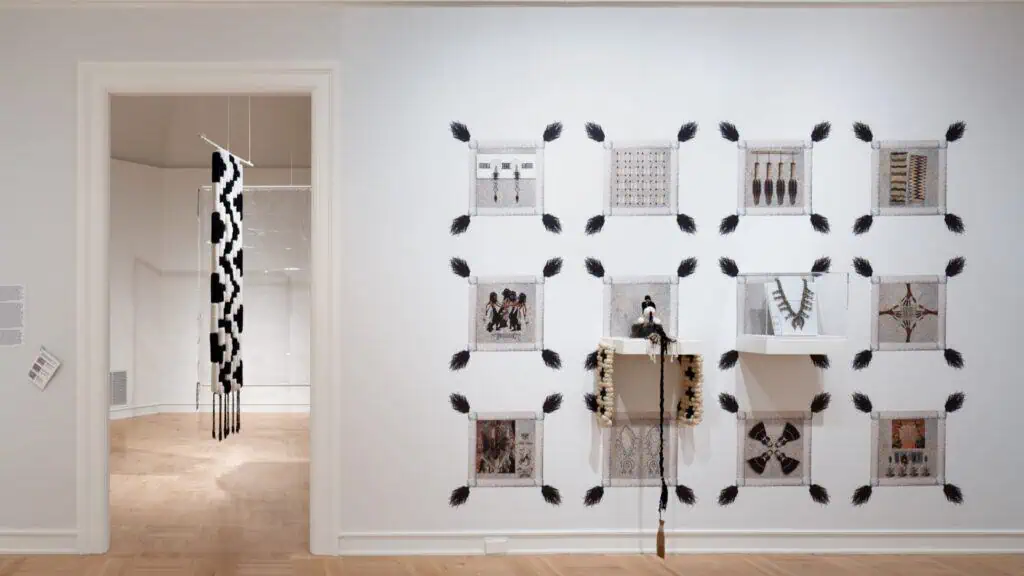
ojo|-|ólǫ́ is a celebration of Indigenous-made objects, and the history, culture, and labor that have gone into creating them for millennia. Riege makes the point that it doesn’t matter what a thing is made of; what is more important is the person and intention behind it, as well as the preceding stories, traditions, and artists that created its path forward. Perhaps objects aren’t static, and as such, they can take pieces of us—memories, emotions, hopes and dreams—along with them as they travel through hands and households and years.
Follow Us
AANHPI Month: Where to Celebrate, Eat, and Learn Around Seattle
From festivals and museum exhibits to food tours and historic neighborhoods, here are a few ways to mark the month across the region.
Asian American, Native Hawaiian, and Pacific Islander Heritage Month—known as AANHPI Month—is observed in the U.S. each May. It began as a weeklong observance in 1978 and expanded to the full month in 1992. Asian, Hawaiian, and Pacific Islander communities in the United States extend back much further, including to the late 16th century, when…

Black Panther Park in Skyway Becomes First Black Panther Park in the World
The new community garden honors the Black Panther Party’s legacy of food justice and the Skyway neighbors who helped bring it to life.
On a sunny Sunday earlier this month, at the corner of 75th Avenue and Renton Avenue South, the community gathered for the opening of Skyway’s Black Panther Park. Inspired by the Black Panther’s Free Breakfast for School Children program that compelled the federal government to provide breakfast in schools, Black Panther Park is a community…

Rearview Mirror: A Family Coming Apart, SIFF, and My First Fashion Show
Things I did, saw, ate, learned, or read in the past week (or so).
The Family House A house can hold a lot, and Seattle Rep’s Appropriate knows that. Branden Jacobs-Jenkins’ Tony-winning play, directed here by Timothy McCuen Piggee, drops the Lafayette siblings into their late father’s hoarded, falling-apart Arkansas plantation home for an estate sale, and lets the whole thing crack open from there. The sibling dynamics are…
Studio Sessions: Raili Jänese
The Kirkland painter brings a playful eye to daily life and the little rituals of being human.
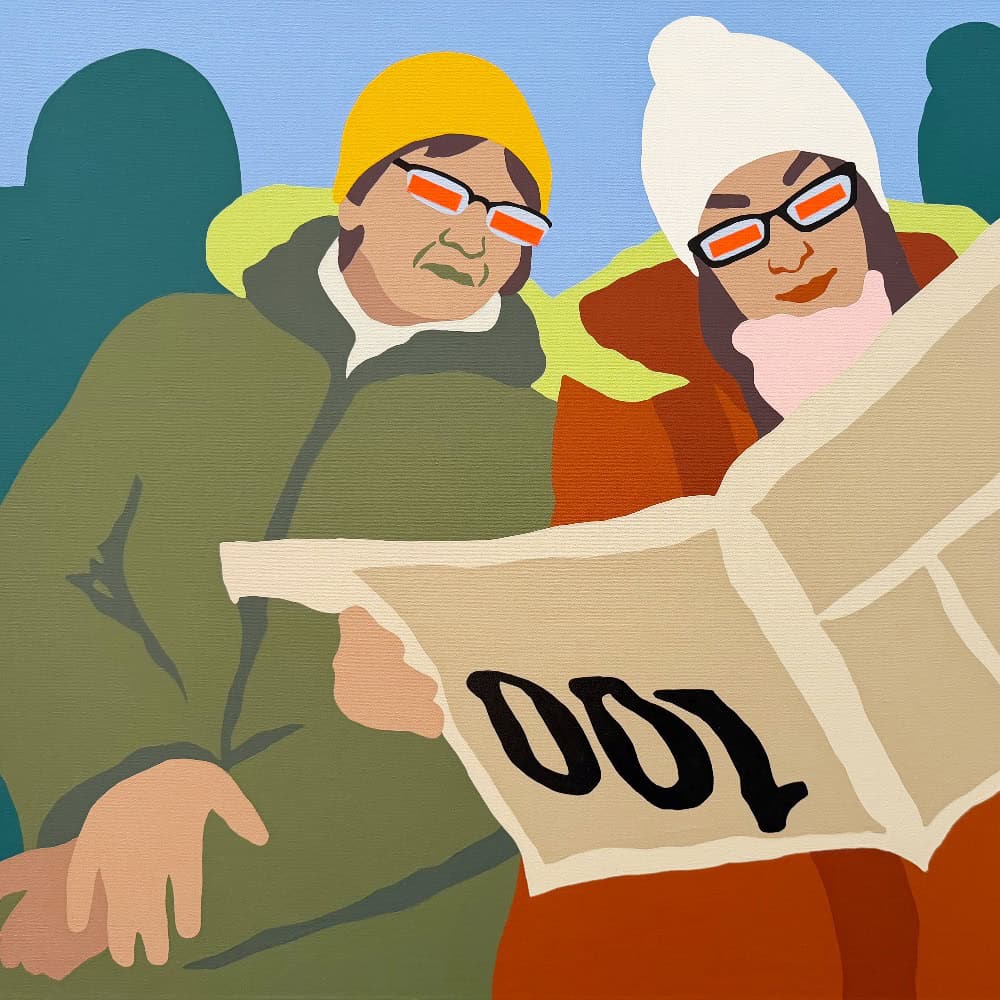
Artist Raili Jänese pays close attention to the small stuff. It might be a goose on the move, a rabbit in the yard, or a person lost in the rituals of coffee or cooking. The Estonian-born artist, now based in Kirkland, makes colorful acrylic works that turn everyday behavior—human and animal alike—into something funny and…