




The Fight to Preserve Salmon in the Pacific Northwest
Author Langdon Cook discusses his new book, "Upstream: Searching for Wild Salmon From River to Table."
By Stephen Strom June 2, 2017
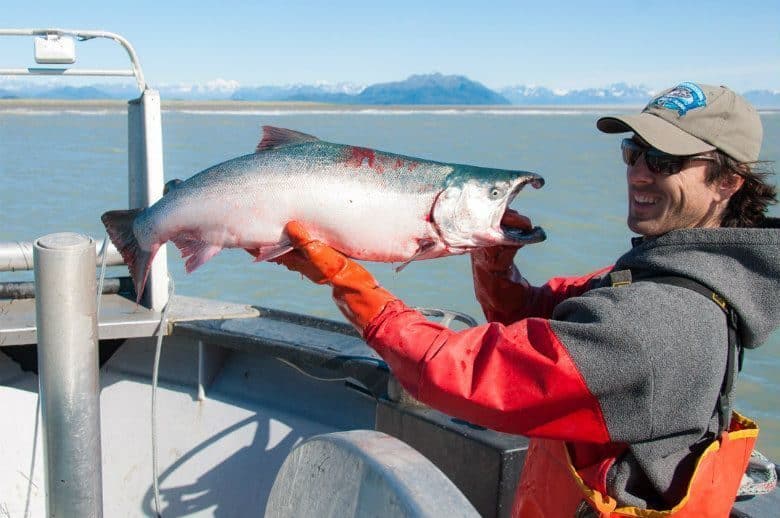
The Pacific Northwest is many things. Tall evergreen trees, gorgeous mountain peaks, beautifully carved islands and salmon. Wild, delicious salmon.
However, this vital food source for humans and orca whales alike, is beginning to thin out. In his new book, Upstream: Searching for Wild Salmon From River to Table, author Langdon Cook dissects salmon culture in the Northwest and the importance of conservation for these incredibly intelligent creatures. Cook digs into how we can be mindful of the salmon population in years to come. We caught up with Cook ahead of his book launch at Town Hall (7:30 p.m. Monday) to discuss salmon recovery efforts and the book, which is now on sale at Amazon and local bookstores.
Seattle magazine: How did you come to write a book about salmon?
Langdon Cook: For the past decade I’ve been writing about the intersection of food and nature, specifically with wild foods and the foragers who seek them out. Salmon, as a subject, seemed like a logical extension of the research I had done on my previous book, The Mushroom Hunters, which is about the hidden economy of wild mushroom pickers and buyers at work in the woods. Little did I realize the tricky currents I was wading into. Whereas the wild mushroom economy is relatively new, little known and largely out of view, the salmon economy is ancient—going back to the arrival of the first people on the continent—and complex. Lots of dogs in the fight over salmon.
SM: How have salmon been impacted over the years?
LC: Wild Pacific salmon populations have been trending downward almost everywhere in North America outside of Alaska for more than a century, basically since the arrival of Euro-American settlers and the industrialization of salmon habitat. Even Alaska has its problems. The usual suspects are in play: dams, development, agriculture, timber harvest, mining and so on. Modern civilization has not yet found a way to easily coexist with the wild, but there are scientists and advocates doing innovative work right now that could change that.
SM: Why is salmon conservation so important?
LC: An ecologist once told me that anything we do to help wild salmon will also help people in the long run. Remember that while salmon might disappear into the blue pastures of the Pacific to mature, they return among us to spawn the next generation. Salmon need quality water and habitat to thrive, as do people.
SM: Salmon is a huge identifier of Pacific Northwest culture. If the salmon population continues to decline, how do you think this will affect our culture in years to come?
LC: Indeed, salmon are the ultimate totem for our region. It’s sad to think of all that iconography throughout the Northwest—the murals and sculptures and abstract flourishes—as a sort of memorial. In the short term salmon will likely continue to decline, but I’m holding out hope that we can find solutions to reverse the decline. Otherwise this will be a lonelier place.
SM: What do you think people can do on a personal level to help aid salmon recovery?
LC: Well, the first thing is simply education. Consumers need to recognize the differences, for example, between farmed salmon and wild salmon. Farmed salmon are raised in tight confinement like industrial livestock and fed a diet of fish pellets and antibiotics, along with chemical colorants to give their meat the desired pink hue. Recent studies suggest that salmon farms are having negative impacts on wild salmon in the form of disease and parasites. Wherever salmon farming has become big business—think of Scandinavia and the U.S. East Coast—the political will to protect wild runs has eroded. So, when you buy a farmed salmon, you’re supporting a business model that doesn’t value wild salmon.
That said, even within the wild salmon category, the terms can be slippery. Much of our so-called “wild salmon” harvest is supported by hatchery stocks, which are keeping our commercial salmon fishing industry afloat. The goal should be a future with a much smaller hatchery footprint. Hatchery salmon don’t have the genetic diversity for the long haul, and they’re negatively impacting wild populations.
SM: You were able to talk with many people of different backgrounds who are passionate about salmon in writing this book, what was the biggest thing you were able to learn?
LC: In North America we are more closely tied to salmon than any other wildlife. Entire human cultures have been organized around salmon—are still organized around salmon. When we hold up a mirror to salmon, we see our own reflection. The question now is: Do we like what we see?
SM: What’s your favorite salmon dish to cook?
LC: Like most people, I like to keep it simple when it comes to salmon. Nothing too fancy. I usually give a fillet a spice rub and grill it. The key is to keep the heat relatively low so you don’t burn up all the fat. That’s the way to keep it succulent. I also smoke a lot of my salmon. I coat the fillets with a dry brine that’s one part salt to three parts brown sugar along with some chopped garlic and cracked black pepper. After a night of brining, I rinse off the fillets and allow them to air dry for an hour or longer before going into the smoker. Typically, I use cherry wood or apple for the smoke, and sometimes a fresh branch of alder.
Follow Us
AANHPI Month: Where to Celebrate, Eat, and Learn Around Seattle
From festivals and museum exhibits to food tours and historic neighborhoods, here are a few ways to mark the month across the region.
Asian American, Native Hawaiian, and Pacific Islander Heritage Month—known as AANHPI Month—is observed in the U.S. each May. It began as a weeklong observance in 1978 and expanded to the full month in 1992. Asian, Hawaiian, and Pacific Islander communities in the United States extend back much further, including to the late 16th century, when…
Black Panther Park in Skyway Becomes First Black Panther Park in the World
The new community garden honors the Black Panther Party’s legacy of food justice and the Skyway neighbors who helped bring it to life.
On a sunny Sunday earlier this month, at the corner of 75th Avenue and Renton Avenue South, the community gathered for the opening of Skyway’s Black Panther Park. Inspired by the Black Panther’s Free Breakfast for School Children program that compelled the federal government to provide breakfast in schools, Black Panther Park is a community…

Rearview Mirror: A Family Coming Apart, SIFF, and My First Fashion Show
Things I did, saw, ate, learned, or read in the past week (or so).
The Family House A house can hold a lot, and Seattle Rep’s Appropriate knows that. Branden Jacobs-Jenkins’ Tony-winning play, directed here by Timothy McCuen Piggee, drops the Lafayette siblings into their late father’s hoarded, falling-apart Arkansas plantation home for an estate sale, and lets the whole thing crack open from there. The sibling dynamics are…

Studio Sessions: Raili Jänese
The Kirkland painter brings a playful eye to daily life and the little rituals of being human.
Artist Raili Jänese pays close attention to the small stuff. It might be a goose on the move, a rabbit in the yard, or a person lost in the rituals of coffee or cooking. The Estonian-born artist, now based in Kirkland, makes colorful acrylic works that turn everyday behavior—human and animal alike—into something funny and…