




How Our 107-Year-Old Pike Place Market Survived
Knute Berger visits Pike Place Market 50 years after its reputed demise
By Seattle Mag July 17, 2014
This article originally appeared in the August 2014 issue of Seattle magazine.
In his poem “Bubbs Creek Haircut,” Beat poet Gary Snyder drew on impressions from a trip through Seattle in the mid-1950s:
Seattle has the best for logger gear
once found a pair of good tricouni boots
at the under-the-public-market store,
Mark Tobey’s scene,
torn down I hear—…
Not so fast, Snyder. That’s not what happened. At the time the poet passed through, there had long been talk about demolishing Pike Place Market—it was a half-century old and declining, a lively but shabby bookend to First Avenue’s Skid Road. But rumors of the Market’s death were premature. Not only did the now 107-year-old Market survive, it thrives as an engine for tourism, a source of local food, an outlet for artisans and a cornerstone urban neighborhood.
It didn’t happen by accident. The Market’s demise was addressed 50 years ago by a grassroots group that is still going, protecting and serving it today. In September 1964, a citizens’ group devoted to preserving “Mark Tobey’s scene” in the face of a massive 1960s urban renewal scheme launched Friends of the Market over a Champagne breakfast at Lowell’s restaurant.
In that era, the federal government dangled millions of dollars in front of cities to rebuild their downtowns, and Seattle wanted its share of that largesse. With the Market considered to be urban blight, the city eyed the location as a prime spot for high-rises and parking lots. Friends of the Market launched to change hearts and minds. Its activists did so not simply by claiming that it was historic, though it was, but by showing that saving the Market could accomplish urban renewal better than unleashing the bulldozers. In fact, they outlined a model that would both preserve character and serve a low-income population, plus broaden Pike Place’s appeal to a new generation of downtown condo dwellers and tourists. Renewal could come by improving a special place that had magic in it; magic not easily conjured in glass and steel.
Victor Steinbrueck’s name is the one most associated with the Friends campaign, but there were many, many others involved in the effort. One of the key instigators of Market preservation, for example, was Wing Luke, the first Asian elected official in Washington and a member, elected in 1962, of the Seattle City Council. Luke was a progressive way ahead of his time, which was tragically cut short by his death in a plane accident in 1965. He was interested in promoting urban agriculture, open housing, and was almost alone on the council for wanting to protect the Market from the wrecking ball. Steinbrueck credited Luke with getting the movement to save the Market going.
The Friends used art to convey their message—the paintings of the Market by Northwest artist Tobey, the sketches by architect Steinbrueck, the expansion of the arts and crafts elements by the Market itself. They devised a ballot measure that offered an alternative to the city’s plan to tear it down. Famously, the Friends put the Market’s future to a public vote and won in 1971. But that was just a beginning.
The Friends and the city had to hammer out a strategy for going forward, with a plan that laid out the values of the Market’s renewal. They sought to protect more than bricks, mortar and vegetables, but an entire urban ecosystem—the farmer stalls, yes, but also housing for older and low-income residents. They sought to expand social services and create a “well-balanced, pleasant urban space.”
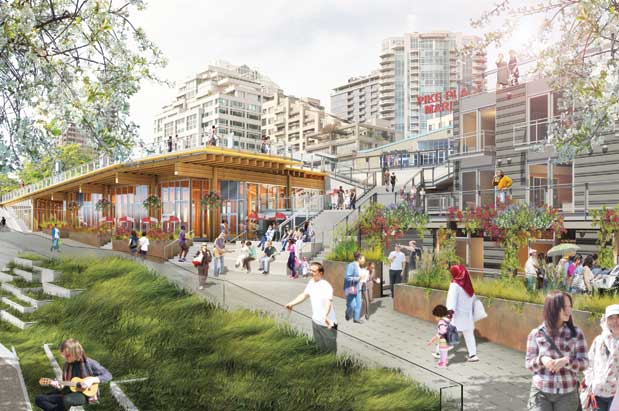
That they’ve done. The Market is home to day care, a food bank, a senior center, a medical clinic and other services for the district’s residents and neighbors. It also attracts some 10 million visitors per year. And it continues to evolve. A new extension of the Market was announced in March, with a completion date of 2016. A parking lot on Western Avenue will be converted into a complex connected to the Market by the Giuseppe “Joe” Desimone Bridge, named for the Italian farmer and vendor who was a Market mainstay and owner for many years. Called the Pike Place Market Waterfront Entrance, the project will feature space for new retail, restaurants, possibly a brewery. There will be room for new craft stalls, an open-air deck and plaza with fabulous views, and additional low-income housing. An “overlook walk” is designed to connect it with the city’s planned waterfront improvements.
“Torn down, I hear.” Thanks to Friends of the Market, the poet had it wrong. Not only is the Market still standing, it’s still growing and evolving, along with the city that saved it.
Follow Us

Photo Essay: Ferry Therapy
Words and photographs by Anna Starr.
Riding the ferry is my favorite Seattle pastime. At any given time on a Washington State Ferry you will find a group of tourists with too many suitcases, someone in work clothes peacefully napping, a jigsaw puzzle diligently being completed, lovers having a Titanic-esque moment on a balcony (fun fact: those balconies are called pickleforks),…
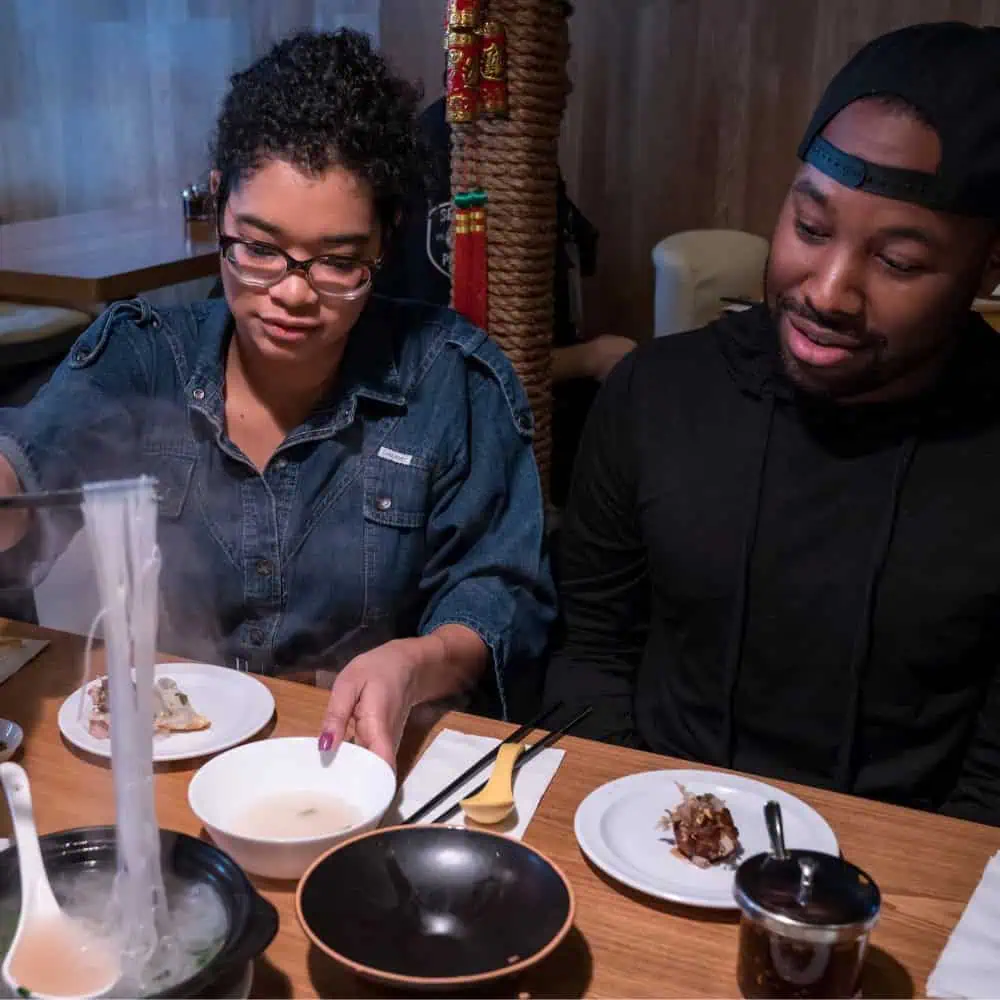
AANHPI Month: Where to Celebrate, Eat, and Learn Around Seattle
From festivals and museum exhibits to food tours and historic neighborhoods, here are a few ways to mark the month across the region.
Asian American, Native Hawaiian, and Pacific Islander Heritage Month—known as AANHPI Month—is observed in the U.S. each May. It began as a weeklong observance in 1978 and expanded to the full month in 1992. Asian, Hawaiian, and Pacific Islander communities in the United States extend back much further, including to the late 16th century, when…
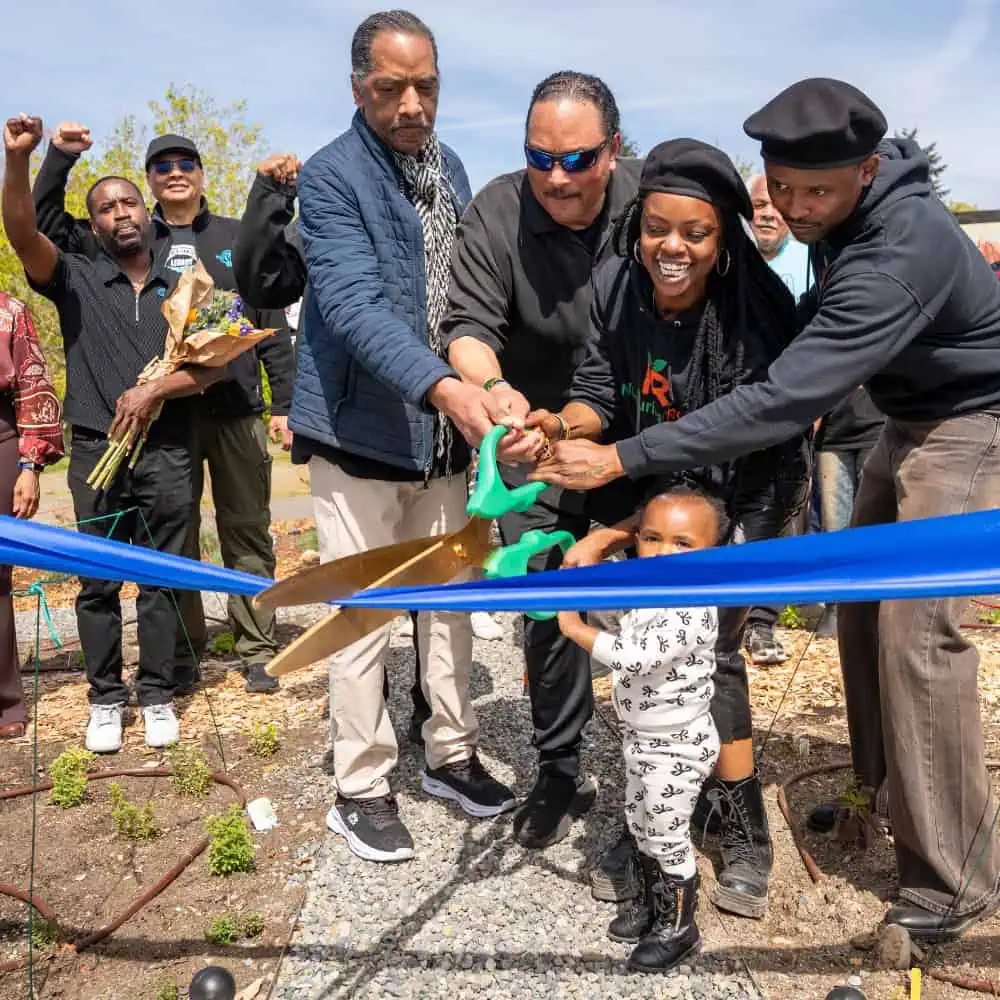
Black Panther Park in Skyway Becomes First Black Panther Park in the World
The new community garden honors the Black Panther Party’s legacy of food justice and the Skyway neighbors who helped bring it to life.
On a sunny Sunday earlier this month, at the corner of 75th Avenue and Renton Avenue South, the community gathered for the opening of Skyway’s Black Panther Park. Inspired by the Black Panther’s Free Breakfast for School Children program that compelled the federal government to provide breakfast in schools, Black Panther Park is a community…

Rearview Mirror: A Family Coming Apart, SIFF, and My First Fashion Show
Things I did, saw, ate, learned, or read in the past week (or so).
The Family House A house can hold a lot, and Seattle Rep’s Appropriate knows that. Branden Jacobs-Jenkins’ Tony-winning play, directed here by Timothy McCuen Piggee, drops the Lafayette siblings into their late father’s hoarded, falling-apart Arkansas plantation home for an estate sale, and lets the whole thing crack open from there. The sibling dynamics are…