




A Shift in the Work Environment: Density is the New Incubator
Knute Berger asks, where does the mother of invention live?
By Seattle Mag September 10, 2013
This article originally appeared in the October 2013 issue of Seattle magazine.
Seattle is widely considered an inventive city. We rank 13th in the world when it comes to “patent intensity,” the ratio of patent applications compared to the city’s population. And, the University of Washington recently reported it now ranks among the top five American educational institutions that incubate new businesses by parlaying research into commercial applications. That’s a jump from 15th two years ago, which puts UW right up there with MIT and UCLA. We’re a creative city, too—the arts are widely touted and embraced—but creativity, broadly speaking, seeps into all sectors, from computer gaming to biotech.
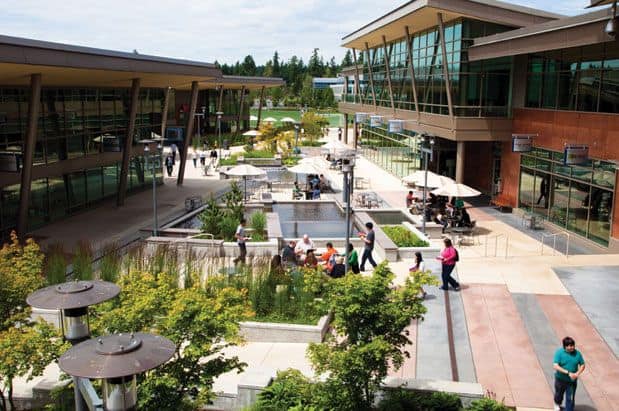
The landscape of business invention, or more broadly, innovation, changes with time. From the ’50s through the ’80s, many major businesses that relied on “knowledge workers,” from Boeing engineers to software coders, moved to the suburbs to create park-like campuses that were thought to stimulate creative juices and big ideas. Employees commuted to places with low-slung buildings and manicured landscaping, tucked away from the rough and tumble of the city and the sprawl outside company walls. Some of these complexes—Microsoft’s main campus in Redmond, for example—took on the feel of college campuses, places where young, brainy workers could focus without distraction.
The trend has shifted in recent years, exemplified by Amazon’s expansion in downtown Seattle, where the company is building high-rises. Amazon’s new headquarters will offer employees respite, but instead of a park, it’s building bio-domes. Other tech companies are opting for urban neighborhoods, including Fremont (Adobe), Pioneer Square (game companies), South Lake Union (biotech), Kirkland (Google), and downtown Bellevue (Microsoft). Density is the new incubator.
The shift is highlighted by a ’60s-era creative space that was recently put on the state’s “most endangered” heritage list: the Talaris Conference Center in Laurelhurst. Built for the think tank Battelle Memorial Institute, the center was where brainiacs used to tackle energy and defense work for the government. Their big thoughts were nurtured by the design of legendary landscape architect Richard Haag, who also designed Gas Works Park. The old campus is about to be converted into a housing development. The Washington Trust for Historic Preservation and neighbors are lobbying to protect it, but the repurposing of the property is emblematic: The pastoral is passé.
The physical and mental landscape of our region’s inventiveness is part of the focus of a new permanent exhibit at the Museum of History & Industry called the Bezos Center for Innovation, which opens on October 12. The center, funded with a $10 million gift from Jeff and MacKenzie Bezos, attempts to survey the history of innovation and offer wisdom shared by locals ranging from Amazon’s Bezos and Starbucks’ Howard Schultz to biologist Leroy Hood and glass artist Dale Chihuly.
Innovation is tied to place, but how? Architect Alan Maskin, principal of the firm Olson Kundig, which designed the new center, says that today’s innovation story isn’t fully told by the solo genius having a “eureka” moment, but is the result of a web of interactions. Innovation has a collaborative dimension, from task-oriented teams to crowd-sourcing to the idea of people sharing working spaces. “Seattle is a place where researchers run into musicians on the trails or at the local farmers’ market and those elements of a place factor into innovation,” Maskin says. Cross-pollination is the key. The new exhibit will have interactive elements asking young people to share their ideas for solving specific problems, helping them tap their inner innovator and provide brain fodder for other young problem-solvers.
It used to be thought that Seattle’s geographic isolation was a virtue—we were forced to be more self-reliant in manufacturing, we had abundant resources, we developed “the Seattle Spirit,” which meant that innovation came from yanking hard on our own bootstraps. In the global era, we’ve shifted to a new model, where our more diverse urban culture, access to capital and global connectedness are seen as competitive advantages. Seattle is being reconceived as a citywide think tank in a setting that can’t be matched by any mere campus.
Follow Us
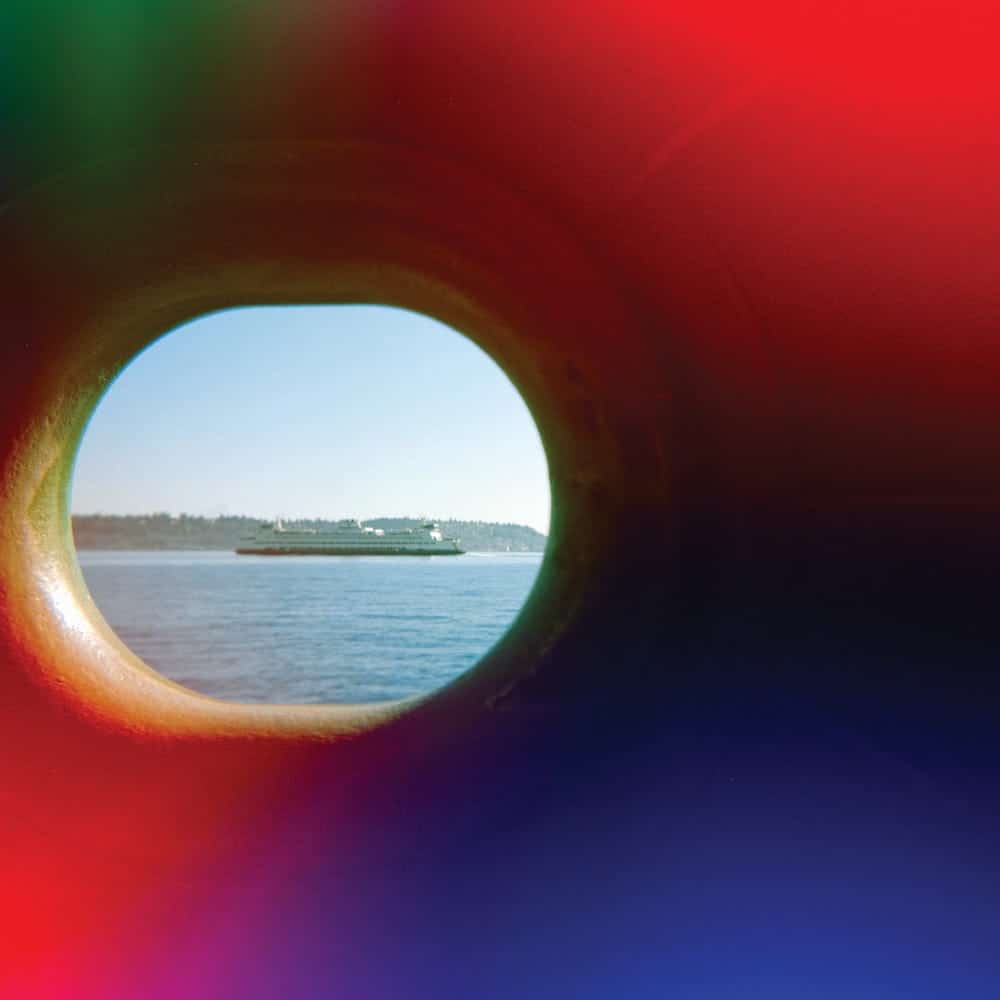
Photo Essay: Ferry Therapy
Words and photographs by Anna Starr.
Riding the ferry is my favorite Seattle pastime. At any given time on a Washington State Ferry you will find a group of tourists with too many suitcases, someone in work clothes peacefully napping, a jigsaw puzzle diligently being completed, lovers having a Titanic-esque moment on a balcony (fun fact: those balconies are called pickleforks),…
AANHPI Month: Where to Celebrate, Eat, and Learn Around Seattle
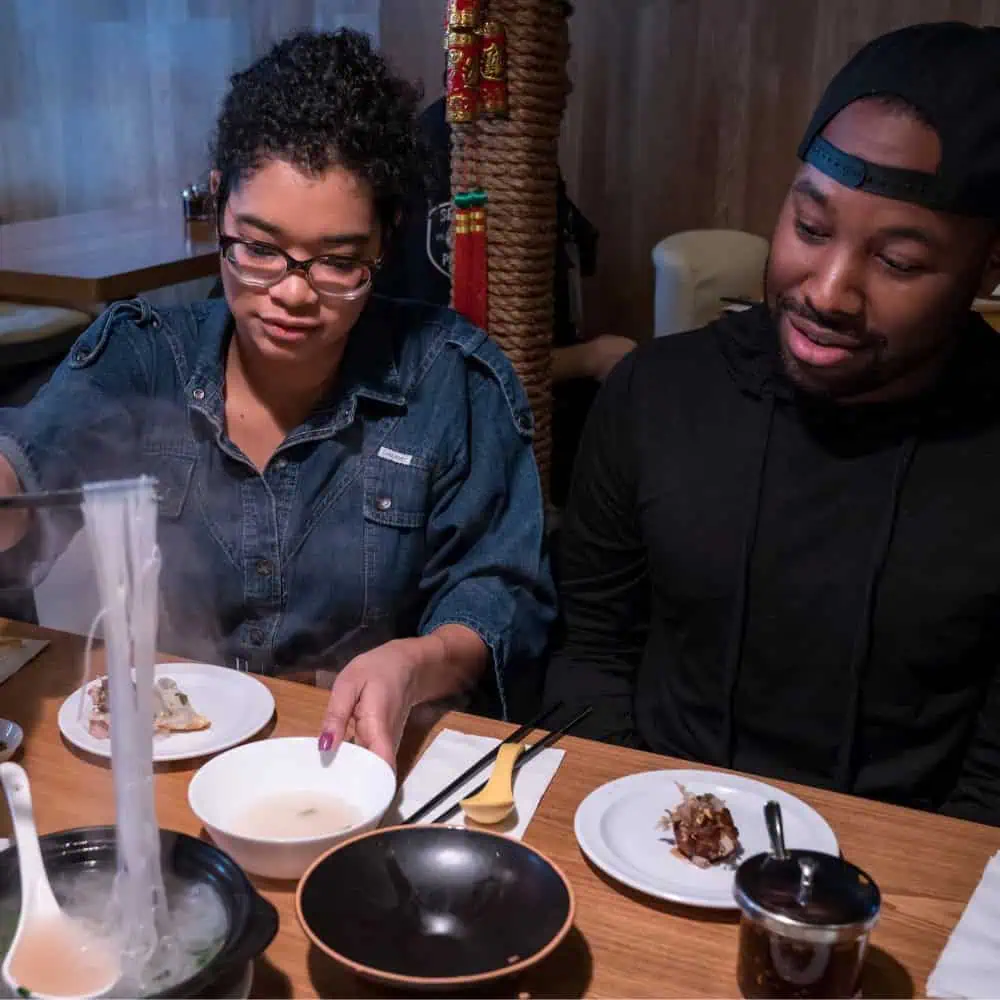
From festivals and museum exhibits to food tours and historic neighborhoods, here are a few ways to mark the month across the region.
Asian American, Native Hawaiian, and Pacific Islander Heritage Month—known as AANHPI Month—is observed in the U.S. each May. It began as a weeklong observance in 1978 and expanded to the full month in 1992. Asian, Hawaiian, and Pacific Islander communities in the United States extend back much further, including to the late 16th century, when…
Black Panther Park in Skyway Becomes First Black Panther Park in the World
The new community garden honors the Black Panther Party’s legacy of food justice and the Skyway neighbors who helped bring it to life.
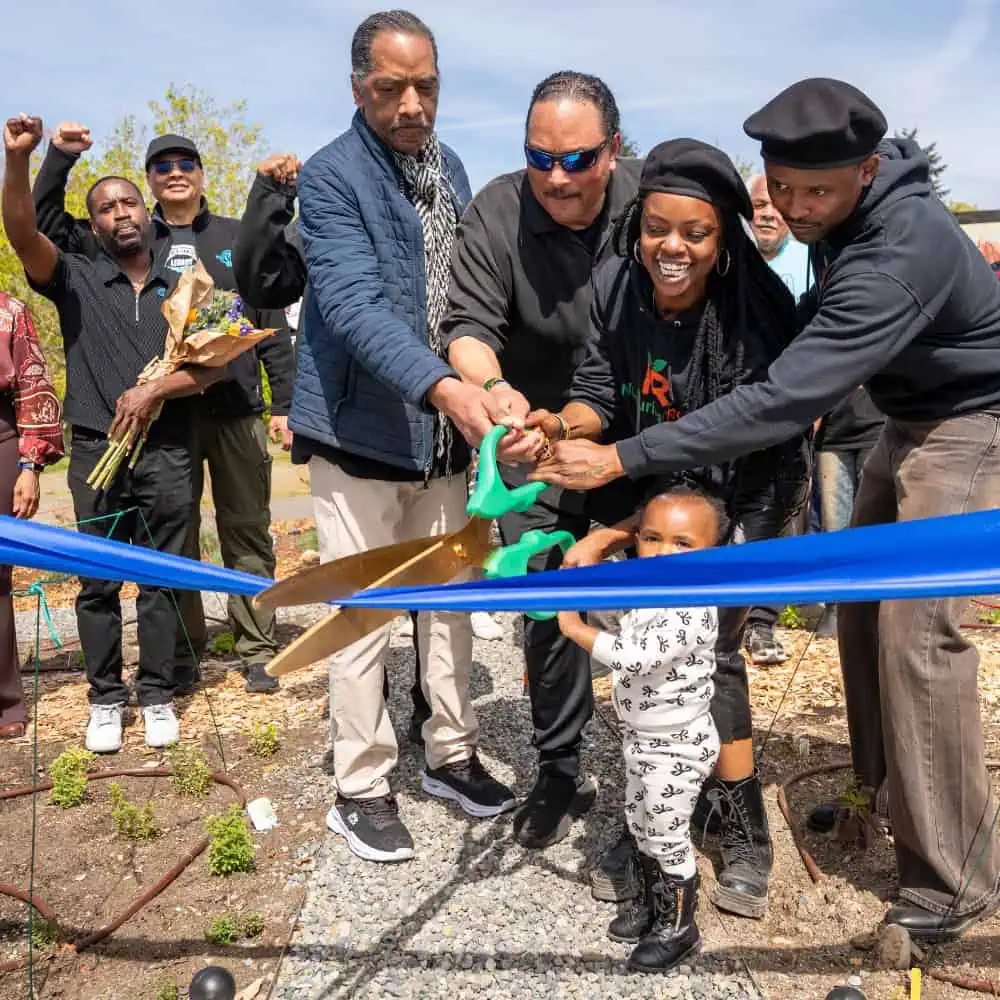
On a sunny Sunday earlier this month, at the corner of 75th Avenue and Renton Avenue South, the community gathered for the opening of Skyway’s Black Panther Park. Inspired by the Black Panther’s Free Breakfast for School Children program that compelled the federal government to provide breakfast in schools, Black Panther Park is a community…
Rearview Mirror: A Family Coming Apart, SIFF, and My First Fashion Show
Things I did, saw, ate, learned, or read in the past week (or so).
The Family House A house can hold a lot, and Seattle Rep’s Appropriate knows that. Branden Jacobs-Jenkins’ Tony-winning play, directed here by Timothy McCuen Piggee, drops the Lafayette siblings into their late father’s hoarded, falling-apart Arkansas plantation home for an estate sale, and lets the whole thing crack open from there. The sibling dynamics are…