




Tolerating Our State’s Gray Areas
Knute Berger tracks progress in Seattle’s messy legal margins
By Seattle Mag August 13, 2013
This article originally appeared in the September 2013 issue of Seattle magazine.
This month, Gray Matters takes up the subject of gray areas. Seattle is a tidy city for the most part, without the huge slums and decay of some older cities. But for all our Scando-Asian embrace of neatness, it is not so much our sense of order that defines us but rather along our messy edges, where creativity flourishes, trends are set, and necessity becomes the mother of invention.
The state’s legalization of marijuana is an excellent example. As the city and state wrestle with how to implement rules for growing and selling weed, these activities are still a federal crime. Washington voters have, in effect, turned Washington into an outlaw state. Even if history proves that pot legalization is the future, we are for now out in front, blazing smoky trails.
Another activity that has gotten a lot of attention recently is the proliferation of renegade ride-sharing services, such as Uber, Sidecar and the pink-mustachioed Lyft. Made possible by smartphone apps, these popular and growing upstarts serve a real purpose: giving people an alternative to car ownership. So far in Seattle, they are unlicensed and unregulated, unlike the taxi and limo services that are now crying foul. Looking the other way on the regulatory niceties, especially in the beginning, can help incubate creative solutions that meet real needs, like getting around the city more sustainably and economically. The question on regulation is not so much whether to regulate but when. You don’t want to strangle the infant in the cradle. Or, maybe you do if you’re a cab company.
And then there is the question of what to do about Nickelsvilles, the homeless encampments that have provided refuge for those who can’t find room or won’t stay in shelters. Nickelsvilles are not a permanent solution, but they are partially self-regulated communities that answer real needs. Surely it will be a long transition to “end homelessness,” and tent cities seem like a valuable tool in the interim. Surely they keep at least some people out of the greenbelts and shop doorways. Even as Seattle’s economy recovers, more systemic failures (affordable housing supply, mental health treatment) aren’t going to be solved overnight. There has to be room somewhere in the mix for improvised, self-built solutions.
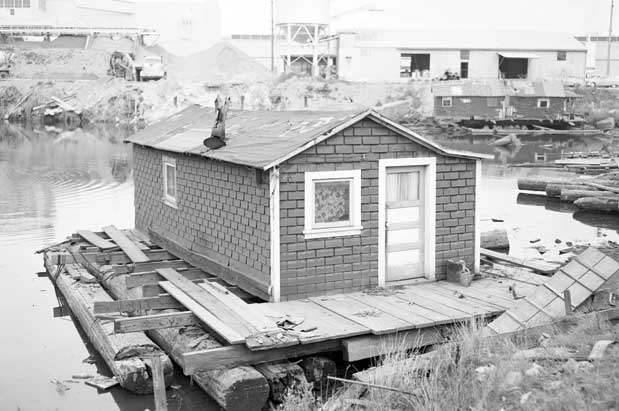
Illegal shanties and shacks have always been a part of Seattle urban landscape. In the 19th century, the city’s urban Native Americans often squatted, sometimes illegally, on the margins of the city that they had occupied for generations. During the Great Depression, there was a large “Hooverville” in SoDo for the down and out. An exhibit at the Museum of History & Industry, “Still Afloat: Seattle’s Floating Homes” (through November 3) documents the history of Seattle’s much beloved houseboats, which evolved from low-income, self-made housing for timber and mill workers, who built shelters on floating logs near where they worked, in places like Lake Union. Others were crafted in the early 1900s as floating vacation cabins at Leschi and Madison Park.
Today, houseboats are fewer in number and highly regulated. The rules governing them evolved over the years, and the rights of owners are still strongly defended by the nonprofit Floating Homes Association. Once considered floating slums, they are now mostly the preserve of the well-to-do and, as Sleepless in Seattle showed 20 years ago, an indelible part of the city’s image.
“Still Afloat” is a reminder that what was once on the fringe can become mainstream, an essential part of the city’s unique livability. In other words, we can benefit by being open to experiments. When it comes to ride-shares, pot and other experiments, we ought to have tolerance for the gray before trying to control everything with the black and white of law.
Follow Us
AANHPI Month: Where to Celebrate, Eat, and Learn Around Seattle
From festivals and museum exhibits to food tours and historic neighborhoods, here are a few ways to mark the month across the region.
Asian American, Native Hawaiian, and Pacific Islander Heritage Month—known as AANHPI Month—is observed in the U.S. each May. It began as a weeklong observance in 1978 and expanded to the full month in 1992. Asian, Hawaiian, and Pacific Islander communities in the United States extend back much further, including to the late 16th century, when…
Black Panther Park in Skyway Becomes First Black Panther Park in the World
The new community garden honors the Black Panther Party’s legacy of food justice and the Skyway neighbors who helped bring it to life.
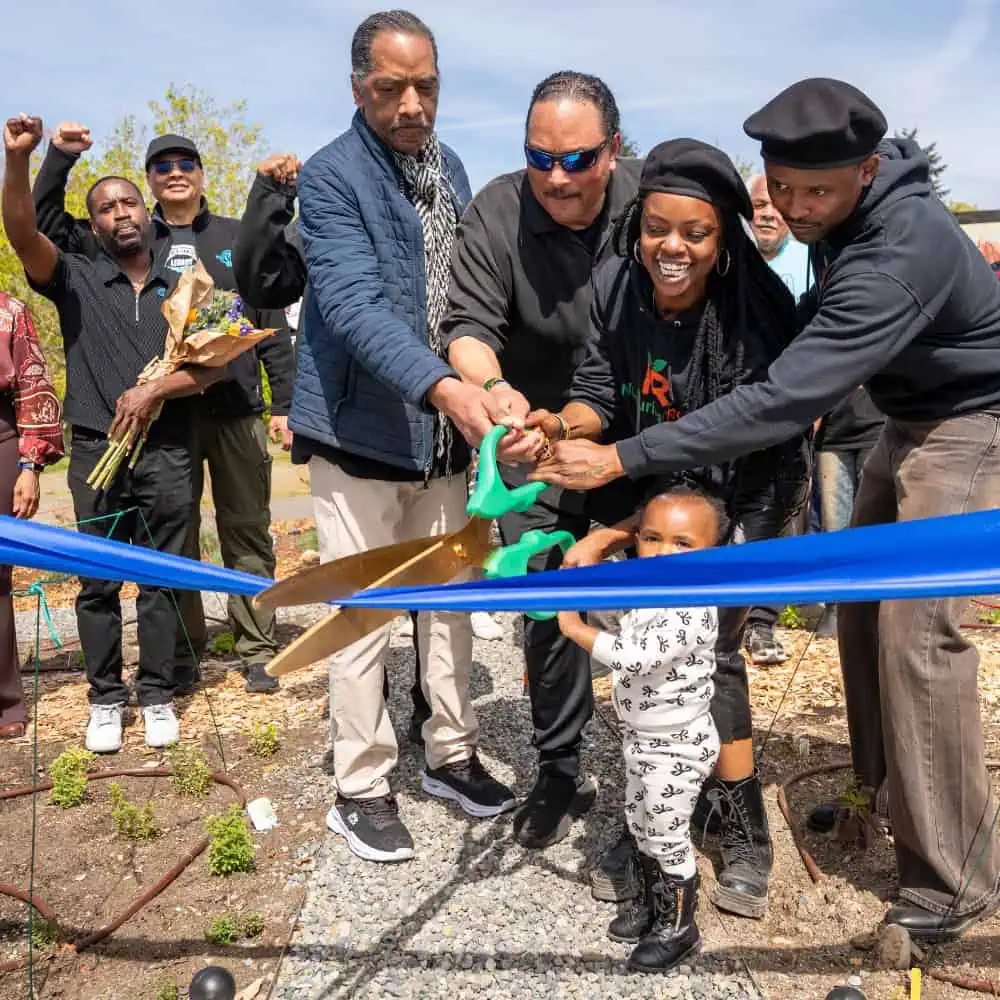
On a sunny Sunday earlier this month, at the corner of 75th Avenue and Renton Avenue South, the community gathered for the opening of Skyway’s Black Panther Park. Inspired by the Black Panther’s Free Breakfast for School Children program that compelled the federal government to provide breakfast in schools, Black Panther Park is a community…

Rearview Mirror: A Family Coming Apart, SIFF, and My First Fashion Show
Things I did, saw, ate, learned, or read in the past week (or so).
The Family House A house can hold a lot, and Seattle Rep’s Appropriate knows that. Branden Jacobs-Jenkins’ Tony-winning play, directed here by Timothy McCuen Piggee, drops the Lafayette siblings into their late father’s hoarded, falling-apart Arkansas plantation home for an estate sale, and lets the whole thing crack open from there. The sibling dynamics are…

Studio Sessions: Raili Jänese
The Kirkland painter brings a playful eye to daily life and the little rituals of being human.
Artist Raili Jänese pays close attention to the small stuff. It might be a goose on the move, a rabbit in the yard, or a person lost in the rituals of coffee or cooking. The Estonian-born artist, now based in Kirkland, makes colorful acrylic works that turn everyday behavior—human and animal alike—into something funny and…