




Finding Freedom
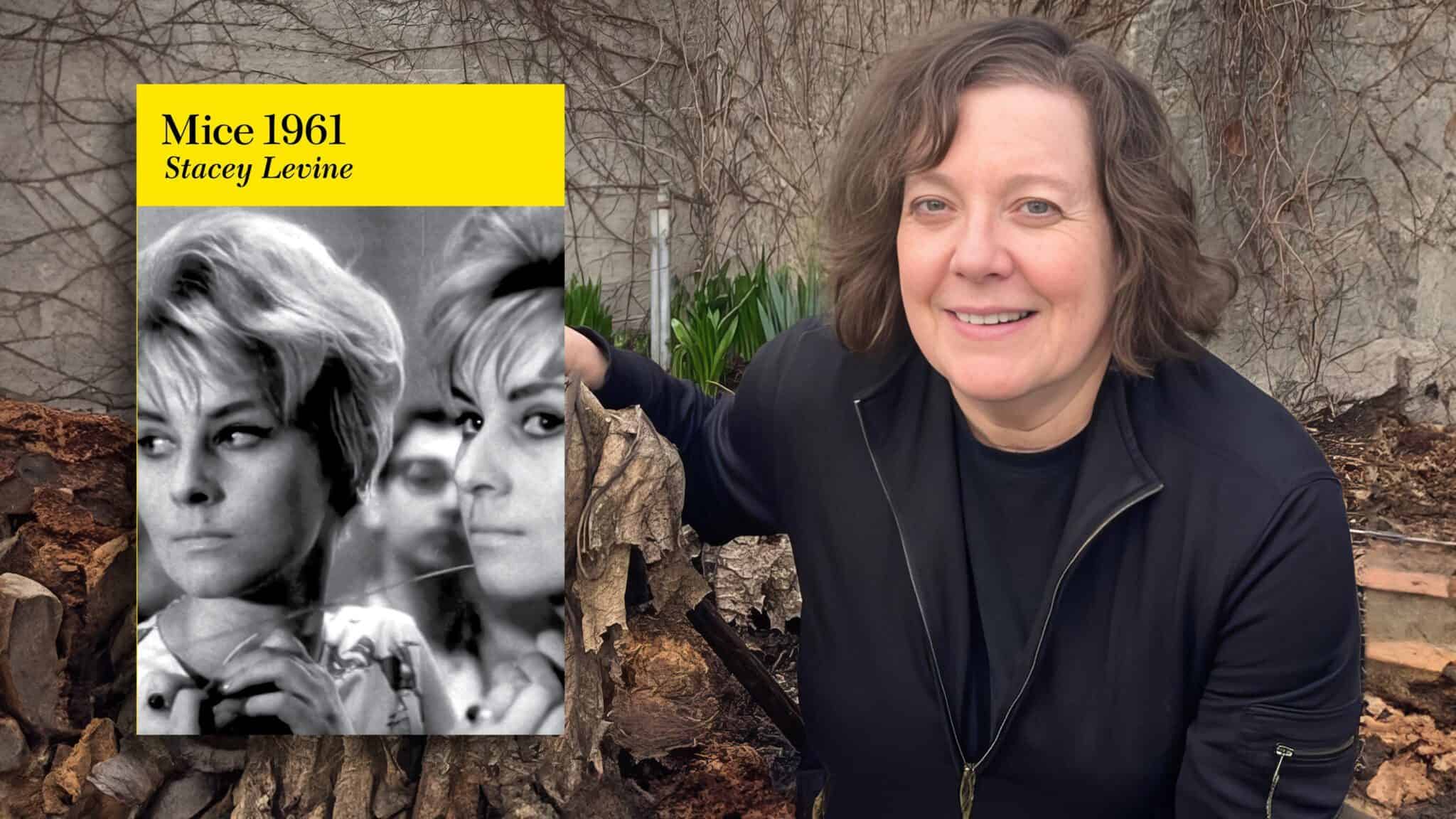
Seattle author Stacey Levine’s new book, Mice 1961, follows two sisters during a single day of their fraught relationship
 By Rachel Gallaher June 12, 2024
This article originally appeared in the July/August 2024 issue of Seattle magazine.
From the get-go, Stacey Levine’s latest novel, Mice 1961, plunges the reader into a story of motion. Full of fast-paced, dramatic language, slicing humor, and a cast of characters that simultaneously attract and repulse, the book (released through Verse Chorus Press) reads quickly — within the first handful of pages, two sisters are running through the sun-soaked streets of their South Florida town — unspooling a strange tale about family, longing, conformity, belonging, and finding the freedom to enjoy life fully, on one’s own terms.
“I’m interested in playing with language,” says Levine, who, in addition to authoring several novels and a book of short stories, teaches English composition and creative writing at Seattle Central College. “I’m also intrigued by the drama of small, unnoticed, everyday life things.”
Mice 1961 is a testament to this curiosity. The story follows a single, critical day in the life of two sisters who, after losing their mother, become fiercely codependent. Jody, the older one, takes care of Ivy, whom everyone knows as Mice — an unfortunate and cruel nickname resulting from her albinism (an inherited condition that causes people to have very light skin, hair, and eyes). Followed everywhere by Girtle, a housekeeper who sleeps on the floor behind the young women’s couch and wants nothing more than to feel close to the sisters, Mice (relentlessly chased and teased by a pack of local high schoolers) spends her days sneaking out of the house and building radios. At the outset, the entire town is preparing for the annual spring party — a potluck at the bakery where a live quartet will perform — and a large chunk of the novel is dedicated to the events of that soiree and, eventually, what happens when a handsome stranger shows up uninvited.
Set against a backdrop of Cold War hysteria, yet focused on a slice of a day, the story is packed with small, vivid details that build characters (the way someone spills a salad, how people dress, the balancing of a wristwatch on a woman’s knee), and language that veers on the theatrical. The narrative takes on the dramatic undercurrent of an old Hollywood film while also capturing the strained paranoia of the era.
“When I first started writing, my books were dubbed as experimental, but to me they aren’t,” Levine says. “My work is voice-driven, and I play a lot with language. One of my trademarks as a writer is characters speaking in a completely stylized way. It’s not how people talk to each other in real life.”
Although initially strange, the language becomes a driving force in the story. Rhythmic, kooky, cruel, and naïve — the characters’ words dance and cut, charged with a power that reduces some to tears and provides others the wholesale acceptance they all seem to crave.
According to Levine, there are two approaches when writing a story. “Either you start out with very scant material and build it up, or you start with tons of material and whittle it down,” she says. “I usually start writing lines that eventually become paragraphs and build it out from there. For this novel, and maybe this is from being more experienced, but I had a whole mess of material that I had to shrink down.”
The idea for Mice 1961 grew out of an image. One day, Levine was perusing Facebook when she saw a photographer of a friend wearing a striped shirt that made him look like a sailor. “He has this expression of conviction on his face,” she recalls, “and I started thinking about how people become very passionate about political causes.” From there, the Cold War-era details rolled out, followed by Ivy’s coming-of-age story. And Levine nails the period-specific details. The novel took her about seven or eight years to write, and she spent hours every weekend screening old movies from the ’60s to help ground the characters.
“I just hope people enjoy the book and get absorbed by it,” Levine says. “I don’t think we can change the world with novels, but I do think that writing is very powerful, so I hope it is transformative to some readers.”
Transformative, maybe — but the book is undeniably absorbing. Once we meet the cast of absurd, misfit characters, it’s easy to feel invested in their stories and, beyond that, their futures. Levine’s beautiful grip on language and her ability to keep the story tight helps engage the reader despite a style that does feel experimental at times — in the hands of a less-deft writer it would be easy to lose the audience.
But we feel for them — for Mice, for Girtle, for the sensitive, lost, and searching men and women along the neighborhood’s Reef Way — rooting as their small acts of defiance against the stagnation of daily life lead them closer and closer to freedom.
Follow Us

AANHPI Month: Where to Celebrate, Eat, and Learn Around Seattle
From festivals and museum exhibits to food tours and historic neighborhoods, here are a few ways to mark the month across the region.
Asian American, Native Hawaiian, and Pacific Islander Heritage Month—known as AANHPI Month—is observed in the U.S. each May. It began as a weeklong observance in 1978 and expanded to the full month in 1992. Asian, Hawaiian, and Pacific Islander communities in the United States extend back much further, including to the late 16th century, when…

Black Panther Park in Skyway Becomes First Black Panther Park in the World
The new community garden honors the Black Panther Party’s legacy of food justice and the Skyway neighbors who helped bring it to life.
On a sunny Sunday earlier this month, at the corner of 75th Avenue and Renton Avenue South, the community gathered for the opening of Skyway’s Black Panther Park. Inspired by the Black Panther’s Free Breakfast for School Children program that compelled the federal government to provide breakfast in schools, Black Panther Park is a community…

Rearview Mirror: A Family Coming Apart, SIFF, and My First Fashion Show
Things I did, saw, ate, learned, or read in the past week (or so).
The Family House A house can hold a lot, and Seattle Rep’s Appropriate knows that. Branden Jacobs-Jenkins’ Tony-winning play, directed here by Timothy McCuen Piggee, drops the Lafayette siblings into their late father’s hoarded, falling-apart Arkansas plantation home for an estate sale, and lets the whole thing crack open from there. The sibling dynamics are…

Studio Sessions: Raili Jänese
The Kirkland painter brings a playful eye to daily life and the little rituals of being human.
Artist Raili Jänese pays close attention to the small stuff. It might be a goose on the move, a rabbit in the yard, or a person lost in the rituals of coffee or cooking. The Estonian-born artist, now based in Kirkland, makes colorful acrylic works that turn everyday behavior—human and animal alike—into something funny and…