




Bending the Limits
From contortion school in Mongolia to Cirque du Soleil — Ninjin Altankhuyag found family under the Big Top
By Samantha Pak February 21, 2025
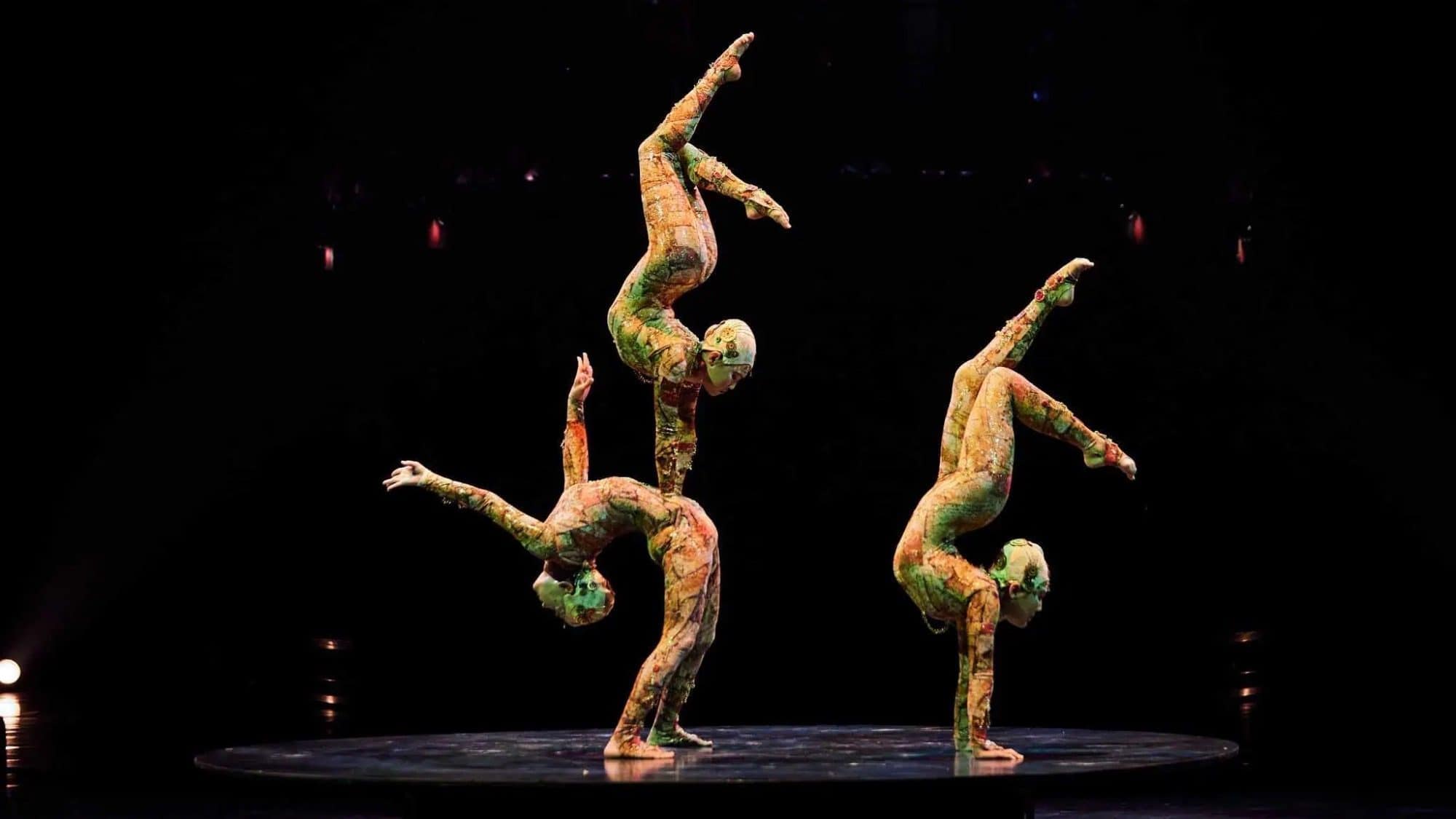
If you’ve ever seen a Cirque du Soleil show, you’ll know the performances are always filled with death-defying stunts and feats of great strength that will often have audiences gasping in both fear and excitement.
There’s usually a contortion act featuring artists bending their bodies in seemingly impossible ways. And if you’re like me, just watching someone lie on their stomach and lift their legs to place their feet on each side of their head hurts your back. But for Ninjin Altankhuyag, her first instinct at the age of 5, after seeing — and being mesmerized by — a contortion act on TV, was to show her mother how she could also contort her body. In response, Altankhuyag’s mother took her to a contortion studio and enrolled her in classes.
Contortion school for kids may sound unusual, but Altankhuyag says in Ulaanbaatar, the capital city of Mongolia and where she grew up, it’s just as common as any other afterschool activity, like ballet. In fact, Mongolia has a long tradition of contortion — many of the top contortionists are Mongolian, and the country has been trying to get the art form recognized by UNESCO as a cultural heritage for about a decade and a half.
As soon as Altankhuyag started contortion classes, she knew she’d found her passion. “I think I got serious once I started,” she says. Because while it could be difficult for kids to commit to anything, she had no problem with the three-hour training sessions as a young girl. As she puts it, “It was just kind of fun.”
That hard work and fun has paid off as Altankhuyag, now 29, has been part of Cirque du Soleil’s touring show Kooza for 10 years. Being part of the show, which has been around for 17 years and is currently in Redmond, Wash., is a dream come true for Altankhuyag. Before being selected for Kooza, she says she was always watching videos of performances online and on her phone — during school, on the bus, you name it.
Prior to joining Cirque du Soleil, Altankhuyag had mostly performed solo. But now, she’s part of a trio of contortionists in Kooza — all of whom are Mongolian (she went to contortion school with one woman, and to university with the other). This shared background helps Altankhuyag feel close to her fellow performers. “We are each other’s family because we’re traveling, not at home,” she says, describing the other women as her sisters. She has a familial bond with everyone in the show. “We’re always there for each other, when we’re sick or injured. We’re always having fun and playing all the time.” As I interview her in the artists’ tent under the Big Top in Redmond, a group of fellow performers have finished training and set up a net to play volleyball.
Since she’s been with Kooza, Altankhuyag has been to nearly two dozen countries and twice as many cities, which can be challenging because she’s constantly dealing with jet lag. Traveling a lot also means being far from her family — which makes it difficult to coordinate calls. Fortunately, the show typically has one to two months off every year, and as they travel from city to city, the performers get one to two weeks off in between. So she can go home during these breaks.
Despite these difficulties, Altankhuyag says visiting different countries is her favorite thing about touring. She learns something new in every country — from the culture, to how people dress, to what they eat. Showtimes can even differ from country to country. In Redmond, shows start at 7:30 p.m., but in Spain, the performances don’t start until about 10 p.m. Even the audiences respond differently. Asian crowds tend to be quieter — they might not applaud after every stunt, but Altankhuyag says you can hear them gasp. American audiences are much more vocal and will yell encouragement and cheer (having seen Kooza, I can confirm).
Altankhuyag’s favorite countries to visit are in Asia because she loves Asian food and she’s always on the lookout for good Mongolian restaurants. When I ask her what some of the country’s signature dishes are, she waxes poetic about the dumplings, which are different from Japanese or Chinese dumplings. “It’s all about meat,” she says.
Follow Us

Photo Essay: Ferry Therapy
Words and photographs by Anna Starr.
Riding the ferry is my favorite Seattle pastime. At any given time on a Washington State Ferry you will find a group of tourists with too many suitcases, someone in work clothes peacefully napping, a jigsaw puzzle diligently being completed, lovers having a Titanic-esque moment on a balcony (fun fact: those balconies are called pickleforks),…

AANHPI Month: Where to Celebrate, Eat, and Learn Around Seattle
From festivals and museum exhibits to food tours and historic neighborhoods, here are a few ways to mark the month across the region.
Asian American, Native Hawaiian, and Pacific Islander Heritage Month—known as AANHPI Month—is observed in the U.S. each May. It began as a weeklong observance in 1978 and expanded to the full month in 1992. Asian, Hawaiian, and Pacific Islander communities in the United States extend back much further, including to the late 16th century, when…

Black Panther Park in Skyway Becomes First Black Panther Park in the World
The new community garden honors the Black Panther Party’s legacy of food justice and the Skyway neighbors who helped bring it to life.
On a sunny Sunday earlier this month, at the corner of 75th Avenue and Renton Avenue South, the community gathered for the opening of Skyway’s Black Panther Park. Inspired by the Black Panther’s Free Breakfast for School Children program that compelled the federal government to provide breakfast in schools, Black Panther Park is a community…

Rearview Mirror: A Family Coming Apart, SIFF, and My First Fashion Show
Things I did, saw, ate, learned, or read in the past week (or so).
The Family House A house can hold a lot, and Seattle Rep’s Appropriate knows that. Branden Jacobs-Jenkins’ Tony-winning play, directed here by Timothy McCuen Piggee, drops the Lafayette siblings into their late father’s hoarded, falling-apart Arkansas plantation home for an estate sale, and lets the whole thing crack open from there. The sibling dynamics are…